





The Hidden Anxiety of Untracked HVAC Systems
Your heating and cooling equipment is running nonstop, but the house still feels uncomfortable, leaving you constantly wondering if a total mechanical breakdown is imminent. When we discuss why consistent maintenance builds trust: a look inside our customer relationships, we are really talking about eliminating this exact type of dread. The root cause of homeowner stress isn't just the breakdown itself; it is the complete lack of historical knowledge about the system's ongoing health. Every time the weather shifts, you are forced to cross your fingers and hope the unit survives another season. Instead of relying on reactive, untracked emergency calls, committing to a proactive, documented care approach serves as the ultimate foundation for your peace of mind.
If you are ready to step away from the anxiety of unpredictable breakdowns, exploring professional HVAC services can help you establish a baseline for your equipment's health.
The True Cost of Reactive Repairs
Waiting for a system to fail often leads to a cascade of extensive mechanical issues. When a single component begins to struggle, it rarely fails in isolation. Instead, it forces every other part of the system to work harder to compensate. A weakened capacitor, for instance, forces the compressor to draw excessive amperage to start up. Over time, this compounded stress can turn a minor, easily preventable issue into a catastrophic compressor failure just as the September early fall transition begins to demand more from your equipment.
Consider the chaotic nature of an emergency service call compared to the controlled, predictable environment of a scheduled tune-up. Emergency repairs are inherently stressful: they happen at the worst possible times, require immediate decisions, and often involve diagnosing a system that has already ground to a halt. In contrast, scheduled tune-ups allow technicians to evaluate the equipment while it is still functioning, identify microscopic changes in performance, and correct them before they disrupt your daily life. This fundamental shift from reactive panic to proactive management is the first step in building a lasting partnership.
How Historical Data Transforms HVAC Service
Historical maintenance tracking means much more than simply changing a filter or wiping down a cabinet. It involves logging precise, quantifiable data over the lifespan of your equipment. By recording amp draws, refrigerant pressures, capacitor microfarad readings, and motor temperatures year after year, technicians build a comprehensive medical chart for your climate control system. This data-driven methodology completely removes the guesswork from diagnosing complex mechanical issues.
If you want to ensure your system's data is accurately logged year after year, enrolling in a dedicated HVAC maintenance plan provides the consistency required for true predictive care.
Why tracking matters in coastal climates: The Virginia Beach coastal environment is particularly unforgiving on outdoor mechanical equipment. Airborne salt and high humidity accelerate galvanic corrosion on outdoor condenser coils and electrical contacts. Without historical tracking, a technician might look at a corroded coil and guess at its remaining lifespan. With a documented history, they can track the exact rate of degradation, noting how much efficiency has been lost since the previous pre-season check, and provide you with a factual timeline for eventual replacement.
Predicting the Unpredictable
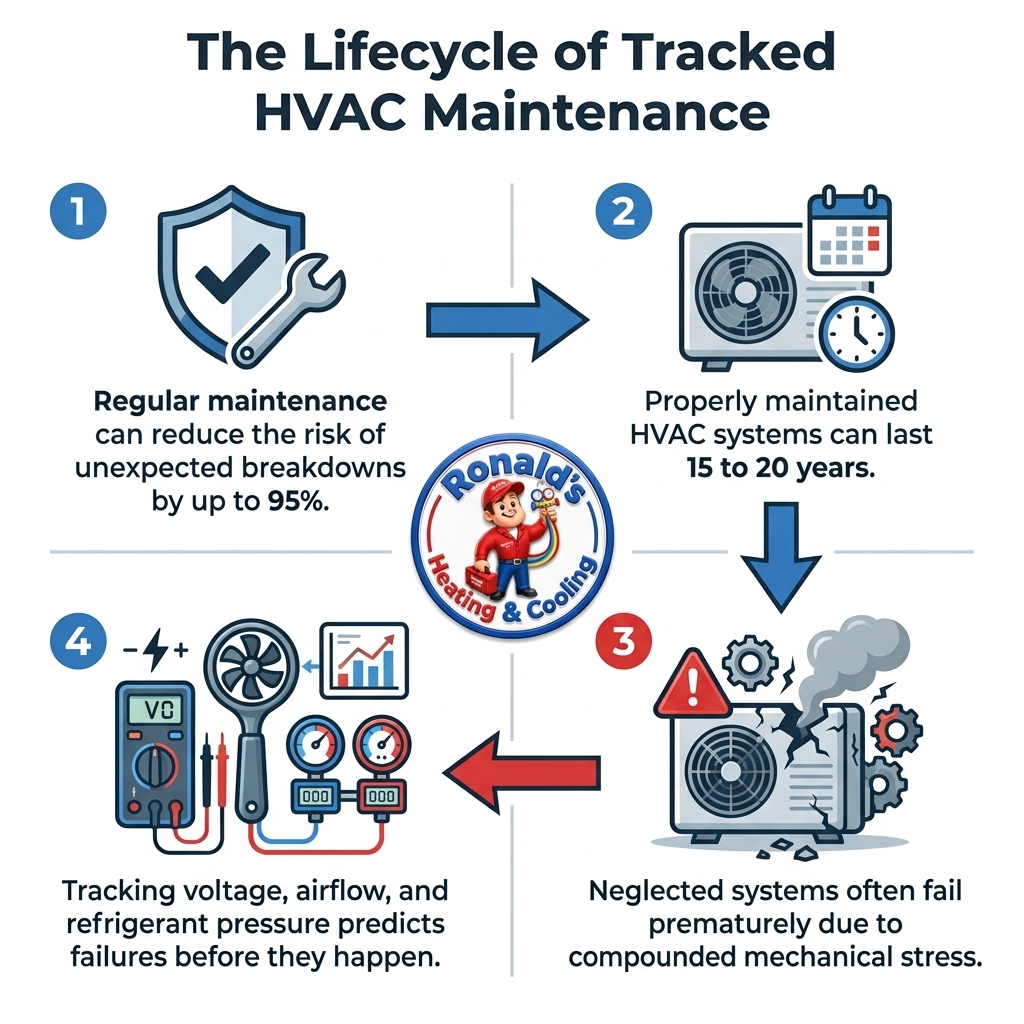
Having a documented baseline allows professionals to spot micro-changes in performance long before a total failure occurs. Tracking voltage drops or increased motor friction can accurately forecast when a blower motor or compressor is nearing the end of its functional lifespan.
• Reactive (Untracked) — Diagnostic Method: Guesswork based on current broken state. — Homeowner Experience: High stress, sudden breakdowns, rushed decisions.
• Proactive (Tracked) — Diagnostic Method: Data comparison against historical performance logs. — Homeowner Experience: Predictable timelines, planned replacements, peace of mind.
This level of precision allows homeowners to plan for necessary replacements on their own schedule, rather than being forced into a rushed decision during a midnight emergency. Furthermore, maintaining a documented history of professional care is often required to keep manufacturer warranties intact, protecting your long-term investment.
Surviving the Extreme Shifts of Early Fall
The mechanical stress placed on climate control systems during seasonal transitions is immense, making consistent monitoring absolutely vital. During the September early fall transition, daily temperatures can fluctuate wildly. Warm afternoons may require full cooling capacity, while crisp nights demand that the system switch over to heating. This frequent cycling between different modes forces reversing valves, expansion valves, and blower motors to work overtime.
This transition period frequently exposes hidden weaknesses that were masked during consistent, single-mode summer operation. An air conditioner that managed to limp through August might suddenly fail when the heat pump attempts its first defrost cycle of the fall season.
• Reversing valve strain: Switching back and forth between heating and cooling tests the mechanical integrity of the reversing valve.
• Thermostat short-cycling: Rapid temperature swings can cause the system to turn on and off too quickly, accelerating wear on the compressor.
• Airflow imbalances: Dust and debris accumulated over the summer can restrict airflow, causing the system to overheat when the furnace ignites for the first time.
A comprehensive pre-season check recalibrates the system for the upcoming heating load. Consistent maintenance smooths out these transition periods, mitigating the mechanical whiplash of unpredictable weather and drastically reducing the risk of unexpected breakdowns.
The Science of System Stress
When an HVAC unit short-cycles due to rapid temperature swings, the internal components never reach their optimal operating efficiency. The highest amount of electrical and mechanical stress occurs during the initial startup phase. If the system is starting and stopping constantly, the motors run hotter, and the electrical contacts degrade faster. Proper lubrication, precise airflow adjustments, and thorough sensor cleaning mitigate this seasonal wear, ensuring the equipment transitions smoothly from summer cooling to fall heating.
Integrity Over Upsells: Avoiding the High-Pressure Pitch
One of the most common fears homeowners face is calling a technician for a simple repair, only to be pressured into buying a brand-new system. This anxiety is entirely justified in an industry where some providers rely on superficial inspections to push high-pressure sales. However, a deep understanding of a system's true condition allows a trusted contractor to find and fix the actual problem—even if it is just a minor disconnected part.
For more insights on how to navigate service recommendations, learning the trustworthy HVAC opinion differences can help you identify honest diagnostics.
One local homeowner reached out during a winter chill when their heating system stopped working entirely. Another provider had already inspected the equipment, declared the unit outdated, and immediately pushed for a full replacement. By taking the time to thoroughly troubleshoot the system's actual history and current mechanical state, a different technician discovered the real issue: a single small part had simply come unhooked in the attic. Reconnecting and replacing that minor component restored the system completely. This scenario perfectly illustrates the 'replace everything' mentality of untrusted providers versus the precision diagnostics of a dedicated partner.
Diagnosing the Real Issue
Thorough troubleshooting requires patience, specialized tools, and a commitment to finding the root cause of a symptom. If a system is low on refrigerant, a superficial inspection might just recommend a top-off or a total replacement. A diagnostic approach involves using electronic leak detectors to find the exact location of the micro-leak, often exacerbated by the Virginia Beach coastal environment, and presenting the homeowner with factual repair options. Taking the time to find the root cause is the absolute hallmark of a trustworthy provider, demonstrating that integrity in troubleshooting builds a foundation of long-term trust.
Inside the Methodology: What We Actually Track
To truly understand how predictive care prevents sudden failures, it helps to look at exactly what a comprehensive maintenance visit includes. This methodology goes far beyond a basic, superficial 'tune-up'—it is a rigorous, step-by-step evaluation of the system's most critical components.
1. Electrical and motor performance logging: Technicians measure the exact voltage and amperage drawn by the compressor and blower motors. By comparing these numbers to the manufacturer's specifications and previous years' logs, they can identify excessive friction or failing electrical windings before the motor seizes.
2. Coil condition and refrigerant pressure tracking: The indoor evaporator coil and outdoor condenser coil are inspected for debris and corrosion. Refrigerant pressures (superheat and subcooling) are measured precisely. Even a slight deviation in these metrics can indicate a developing leak or a failing expansion valve.
3. Safety mechanism verification: Modern HVAC systems are equipped with multiple safety switches, including high-limit temperature sensors, flame roll-out switches, and condensate overflow monitors. Each of these controls is manually tested to ensure it will properly shut the system down in the event of a malfunction, protecting your home from water damage or fire hazards.
4. Airflow and indoor air quality metrics: Static pressure is measured to ensure the ductwork is moving the correct volume of air. High static pressure indicates a restriction—often a clogged filter or dirty coil—which drastically reduces efficiency and compromises indoor air quality.
The Core Components of Predictive Care
The quick fix: While basic filter changes are important, they are only a fraction of system care. The true value of maintenance lies in precise, year-over-year measurement of internal components. Checking electrical connections, testing safety controls, and measuring airflow are non-negotiable steps in preventing the mechanical stress that leads to premature failure during the September early fall transition.
Why Real Relationships Outlast Quick Fixes
True comfort in a home comes from knowing exactly who to call when things go wrong, and trusting that the person on the other end of the line has your best interests in mind. Transparency, historical tracking, and honest diagnostics naturally generate client referrals and long-term loyalty. When a contractor consistently shows up on time, honors their quotes, and communicates complex mechanical issues clearly, they build an undeniable track record of reliability.
To see how this transparent methodology impacts real homeowners, reading local customer reviews provides a clear picture of community reputation.
The ultimate goal of maintenance isn't just a running machine; it is a stress-free homeowner. Navigating the unique challenges of the Virginia Beach coastal environment requires a partner who understands how the local climate impacts your specific equipment. When you have a documented history of your system's performance, you are empowered to make educated decisions about your home's infrastructure.
The Ripple Effect of Transparent Service
Homeowners who experience honest, data-backed service are far more likely to refer their friends and family. This ripple effect occurs because finding a trustworthy contractor often feels like a rare victory. A trusted HVAC provider becomes more than just a repair service; they become a long-term partner in managing the home's value, efficiency, and overall safety.
Frequently Asked Questions About HVAC Maintenance and Trust
Why is HVAC preventative maintenance important for preventing sudden breakdowns?
Preventative maintenance allows technicians to identify and correct minor wear and tear before it escalates into a major mechanical failure. By cleaning coils, lubricating moving parts, and tightening electrical connections, the system operates with less internal friction. This proactive approach ensures that the equipment can handle the extreme stress of seasonal temperature shifts without sudden, unexpected breakdowns.
How does consistent HVAC maintenance build trust with a contractor?
Consistent maintenance builds trust by establishing a transparent, documented history of your equipment's health over time. When a contractor tracks specific data points year after year, they can show you exactly how your system is aging using facts rather than sales tactics. This ongoing relationship proves that the provider is invested in the long-term performance of your home, not just a quick, one-time repair.
What is actually included in a comprehensive preventative HVAC maintenance visit?
A comprehensive visit goes far beyond a simple filter change or visual inspection. It includes measuring electrical voltage and amp draws, testing all safety controls, clearing the condensate drain line, and checking refrigerant levels. Technicians also inspect the heat exchanger for cracks, calibrate the thermostat, and measure airflow static pressure to ensure the entire system is operating at peak efficiency.
Is a long-term HVAC maintenance plan worth the investment?
Yes, a long-term maintenance plan is widely considered one of the best investments for a homeowner. It significantly reduces the likelihood of expensive emergency repairs, extends the overall lifespan of the equipment, and ensures the system runs efficiently to keep utility costs in check. Furthermore, consistent professional care is often required to maintain the manufacturer's warranty on major components.
How often should an HVAC system be serviced in a coastal climate?
In a coastal climate, it is highly recommended to service your HVAC system at least twice a year—once before the cooling season and once before the heating season. The airborne salt and high humidity characteristic of these regions can accelerate corrosion on outdoor coils and electrical contacts. Bi-annual inspections ensure that this environmental wear is caught early and mitigated before it causes a breakdown.
How does tracking my HVAC system's history prevent high-pressure sales?
Tracking a system's history provides objective, undeniable data about the equipment's actual condition. If a technician can show you that your compressor's amp draw has remained steady for the past three years, there is no room for a high-pressure salesperson to falsely claim the system is failing. Data empowers the homeowner, ensuring that any recommendation for replacement is based on documented facts rather than fear.
Partnering for the Long Haul
A clear explanation of behind-the-scenes tracking proves the immense value of having a dedicated HVAC partner. By documenting how your system responds to the Virginia Beach coastal environment year after year, a trustworthy contractor removes the guesswork from home comfort. You no longer have to cross your fingers when the weather turns; instead, you can rely on factual data and precise diagnostics. We encourage you to step away from the anxiety of untracked systems and explore how a consistent, transparent approach can protect your home, your comfort, and your peace of mind for the long haul.
