





The Truth About Your Home's Air Quality as Fall Approaches
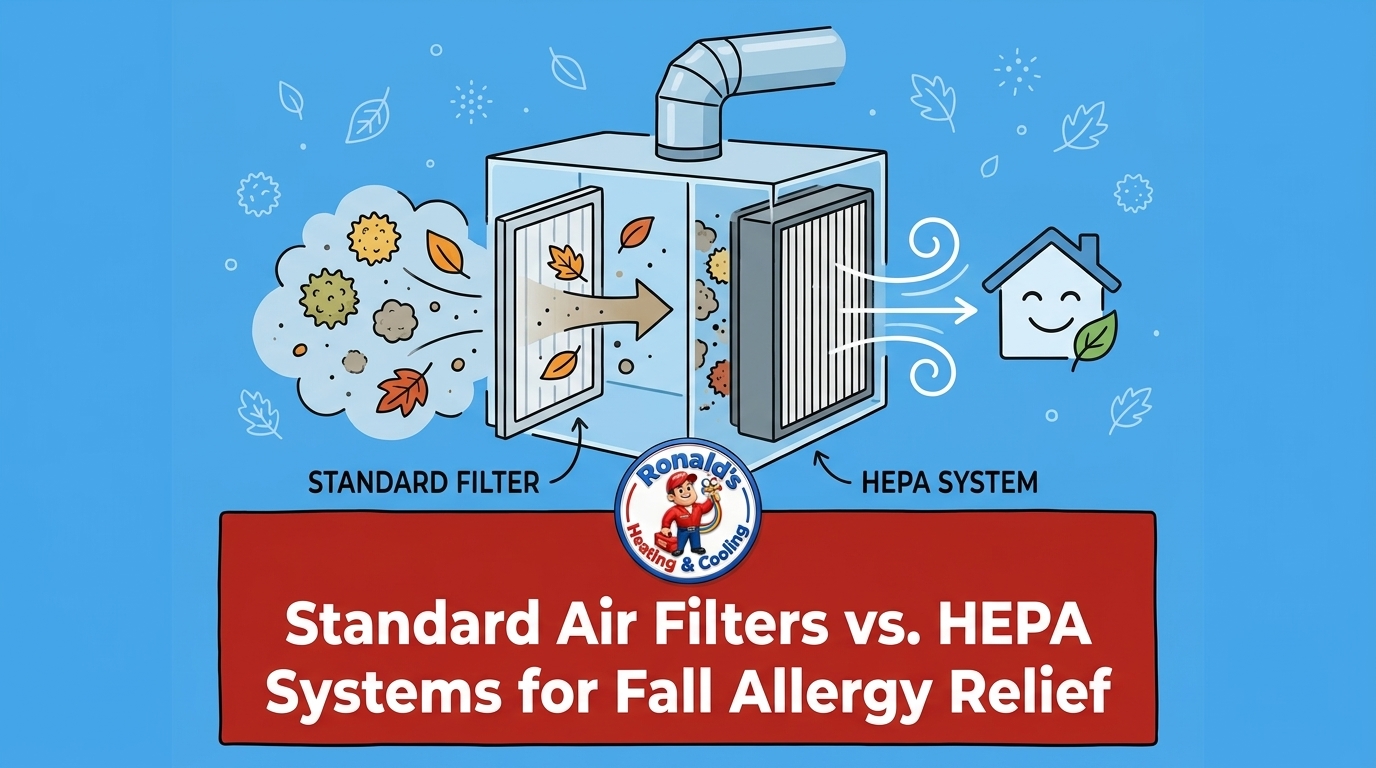
Most homeowners mistakenly believe that their basic, one-inch pleated furnace filter is designed to purify the air they breathe. The reality is quite different. When evaluating Standard Air Filters vs. HEPA Systems for Fall Allergy Relief, our team at Ronald's Heating & Cooling always emphasizes that standard filters are built to protect machinery, not human lungs. As the September ragweed onset approaches, families suddenly face a massive surge in microscopic allergens that easily bypass standard fiberglass filters. The decision between sticking with standard pleated filters or upgrading to advanced filtration is critical before the heavy heating season begins. A true understanding of filtration mechanics is required to make an informed choice for your family's health and comfort.
If you are exploring indoor air quality solutions, understanding the difference between standard filtration and whole-home air scrubbers is the perfect place to start.
The False Sense of Security
Changing your air filter regularly is a great habit, but we often see it provide a false sense of security regarding indoor air quality. You pull out a dusty, gray filter, replace it with a crisp white one, and assume your home's air is now clean. However, the visible dust trapped on that cardboard-framed filter represents only a tiny fraction of what is actually circulating through your living spaces. The most irritating allergens—the ones causing morning congestion, itchy eyes, and endless sneezing—are entirely invisible to the naked eye.
As the weather shifts and windows stay closed, your home becomes a sealed environment. Every time the blower motor kicks on, trapped air recirculates. If your filtration strategy relies solely on a basic one-inch filter, you are essentially allowing microscopic irritants to take multiple laps around your home every single day.
Standard Filters: Designed for HVAC Equipment, Not Human Lungs
To understand why fall allergies persist indoors, you have to look at the original engineering purpose of the standard HVAC filter. Standard fiberglass or pleated filters—typically rated between MERV 1 and MERV 4—serve one primary function: protecting the furnace and air conditioning blower motor from large, damaging debris.
Inside your HVAC system sits a blower motor and an evaporator coil. If large particles accumulate on these components, the system loses efficiency, overheats, or freezes over. Standard filters act as a physical barrier for these large hazards.
What Standard Filters Actually Catch
In our years servicing HVAC systems across the area, we constantly remind customers that while standard filters keep the equipment clean, they do virtually nothing to improve the air circulating through the living spaces of Virginia Beach residential homes. Here is a breakdown of what a basic MERV 1-4 filter is actually designed to trap:
• Pet hair and dander clusters: Large clumps of fur that could easily clog a blower wheel.
• Carpet fibers: Synthetic threads kicked up by foot traffic and vacuuming.
• Large dust bunnies: The visible dust that settles on hardwood floors and baseboards.
• Insects and heavy debris: Spiders or large particles pulled into the return vents.
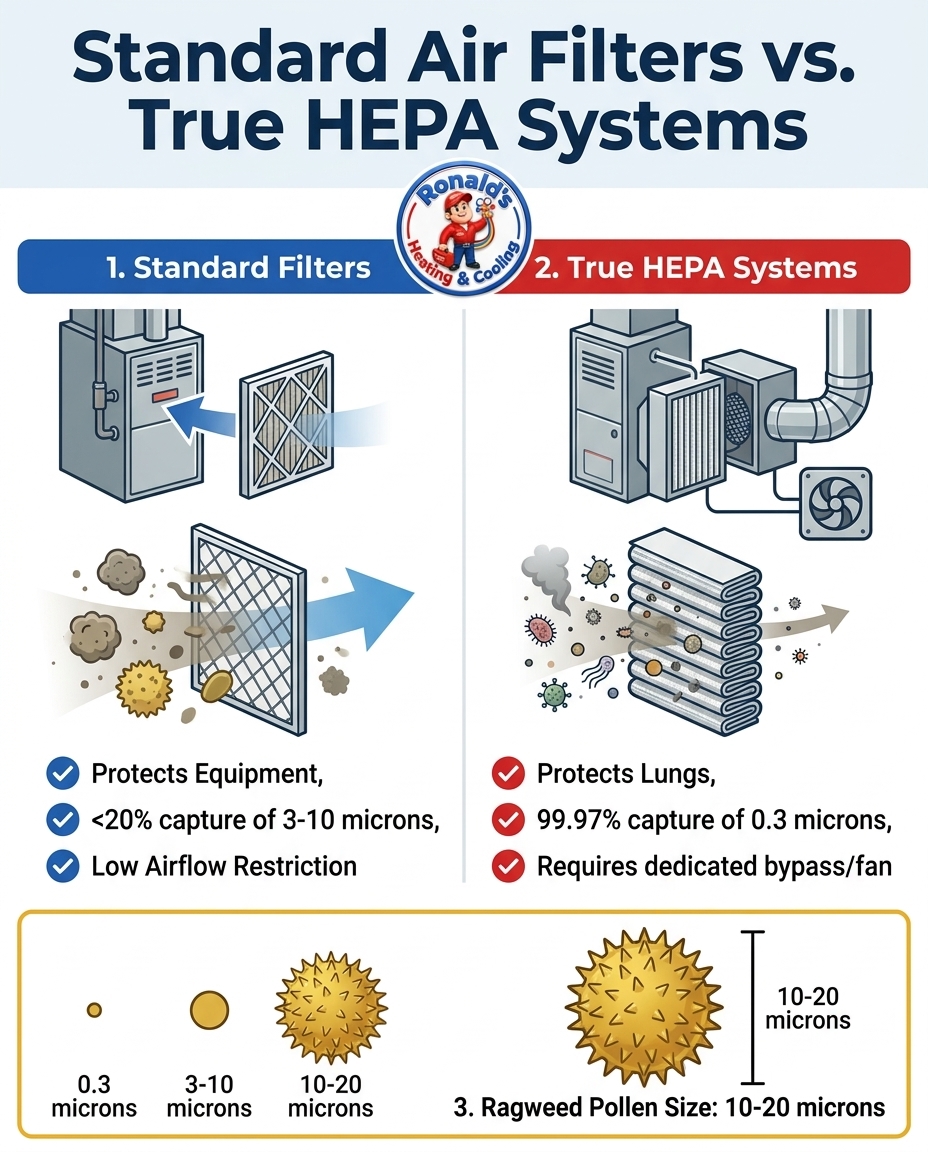
The critical limitation is particle size. These basic filters capture less than 20% of particles in the 3.0 to 10.0 micron range. To put that into perspective, human hair is roughly 70 microns thick. The allergens that trigger respiratory distress are significantly smaller than 10 microns, meaning they pass right through the porous material of a standard filter, traveling straight into the ductwork and blowing directly out of your bedroom vents.
Microscopic Invaders: Why Ragweed Bypasses Basic Filtration
The sheer scale of fall pollen production is staggering. A single ragweed plant can produce up to 1 billion pollen grains during its peak season. When the September ragweed onset hits Virginia Beach, this massive volume of pollen becomes airborne, easily finding its way inside your home through open doors, drafty windows, and even on your clothing.
Ragweed pollen typically measures between 10 and 20 microns in size. While a brand-new, higher-end pleated filter might catch some of these intact grains, the biological reality of pollen makes basic filtration highly ineffective. Here is exactly how these microscopic invaders bypass your system:
1. The Initial Infiltration: Pollen enters the home and gets pulled into the return air vents by the HVAC system's suction.
2. The Fragmentation Process: As pollen grains dry out or hit the mechanical components of the ductwork, they often break apart into microscopic fragments well under 3.0 microns in size.
3. The Filter Bypass: Because standard filters lack the density to trap particles this small, the pollen fragments slip effortlessly through the gaps in the fiberglass or loose pleats.
4. The Constant Recirculation: The blower motor pushes these tiny, highly irritating fragments back into the living areas. The system will cycle the air multiple times an hour, keeping the allergens continuously suspended in the air you breathe.
This constant recirculation is precisely why allergy symptoms often feel significantly worse indoors during the early fall. Your home is essentially acting as a trap, concentrating the pollen fragments while the HVAC system acts as a distribution network.
Standard Air Filters vs. True HEPA Systems: A Side-by-Side Comparison
When you are tired of waking up congested and decide to take action, the market offers two distinct paths: continuing to use standard filters (even higher MERV-rated ones) or upgrading to a True HEPA (High-Efficiency Particulate Air) system. The differences between these two approaches are dramatic.
True HEPA is not just a marketing term; it is a strict mechanical standard. To earn a HEPA designation, a filter must capture at least 99.97% of airborne particles down to 0.3 microns in size. This includes pollen fragments, mold spores, pet dander, and even some bacteria. Here is how we at Ronald's Heating & Cooling compare the two technologies for Virginia Beach residential homes.
• Primary Purpose — Standard 1-Inch Filter (MERV 1-8): Protects HVAC equipment from large debris. — True HEPA Filtration System: Protects human respiratory health from microscopic particles.
• Particle Capture Size — Standard 1-Inch Filter (MERV 1-8): Captures large dust, lint, and hair (3.0+ microns). — True HEPA Filtration System: Captures 99.97% of particles down to 0.3 microns.
• Airflow Impact — Standard 1-Inch Filter (MERV 1-8): Allows maximum airflow for system efficiency. — True HEPA Filtration System: Requires dedicated fans or bypass setups to prevent restriction.
• Installation Requirements — Standard 1-Inch Filter (MERV 1-8): Slides easily into existing return grilles or furnace slots. — True HEPA Filtration System: Requires professional integration into the ductwork.
• Best For — Standard 1-Inch Filter (MERV 1-8): Basic equipment maintenance and budget-friendly upkeep. — True HEPA Filtration System: Severe allergy sufferers, asthma management, and pure air.
The Hidden Danger of Upgrading Standard Filters Without HVAC Modifications
The Problem: A pattern we see often at Ronald's Heating & Cooling happens right after homeowners learn about the limitations of basic filters. A common reaction is to visit the local hardware store and purchase the thickest, highest-rated 1-inch filter available. They see labels promising allergen removal and simply shove a dense, high-MERV filter into their standard return slot. This is a dangerous DIY mistake.
The Cause: HVAC systems are precisely calibrated to move a specific volume of air. This is known as static pressure. When you insert a dense filter into a system designed for a porous fiberglass filter, you create a massive "pressure drop." The blower motor suddenly has to work twice as hard to pull air through the tightly woven material. This severe airflow restriction starves the system of the air it needs to function correctly.
The Solution: This airflow restriction can quickly lead to frozen evaporator coils in the cooling mode, overheated heat exchangers in the heating mode, and ultimately, premature system failure. Proper allergen removal requires maintaining clean pathways and balanced airflow. This is why professional consultation is absolutely necessary before changing filtration types. An honest HVAC assessment focuses on matching filtration density to your system's specific airflow capacity, preventing costly equipment damage while improving your air quality. In many cases, addressing the cleanliness of the pathways through professional air duct cleaning in Virginia Beach is a necessary step before upgrading the filtration media itself.
How Coastal Humidity Amplifies Fall Allergy Symptoms
Indoor air quality does not exist in a vacuum; it is heavily influenced by regional weather patterns. As local Virginia Beach experts, we know firsthand that our coastal climate maintains higher relative humidity well into the early fall months. This lingering moisture creates a unique set of challenges for homeowners trying to manage the September ragweed onset.
High indoor humidity makes the air feel "heavy." This moisture physically traps airborne particles, causing pollen, dust, and dander to hang suspended in the air much longer than they would in a dry environment. Instead of settling to the floor where they can be vacuumed up, these hydrated particles float directly at breathing level.
Furthermore, elevated indoor humidity promotes the rapid growth of fall mold spores. As leaves decay outside and moisture levels remain high inside, mold spores multiply, compounding respiratory irritation for allergy sufferers. Effective filtration must be paired with proper moisture management to truly neutralize these airborne threats. If your home feels clammy or smells musty, you must address the moisture before any filter can do its job effectively. Learning how to achieve perfect home humidity control is a vital piece of the fall allergy puzzle.
Building a Comprehensive Defense Against Indoor Allergens
Upgrading to a HEPA system is a powerful step, but it should always be viewed as part of a holistic indoor air quality strategy. A filter, no matter how advanced, is a passive device—it can only catch what is physically pulled through it. To create a truly healthy environment for Virginia Beach residential homes, complementary technologies are often required to neutralize biological threats that filters simply trap.
For example, integrating UV light systems into your ductwork can actively neutralize mold spores, bacteria, and viruses as they pass through the air stream, adding a layer of active purification to your passive filtration.
The key to success is working with a team that prioritizes your actual needs over pushing unnecessary equipment. One local homeowner recently reached out to Ronald's Heating & Cooling seeking a quote for a full HVAC installation. Our team provided a fair quote—while helping them navigate generally applicable energy rebates for high-efficiency upgrades—and took the time to clearly explain the specific work and the long-term value of the proposed system. That same transparent, educational approach applies to indoor air quality. A trustworthy evaluation will assess your home's unique airflow, duct condition, and specific allergen challenges before recommending any specific system. The ultimate goal is a measurable improvement in your family's comfort and health, not just installing the most expensive equipment available.
Frequently Asked Questions About Fall HVAC Filtration
Can my standard HVAC system use a HEPA filter?
No, in our experience, standard residential HVAC systems are not engineered to handle the severe airflow restriction caused by true HEPA filters. Shoving a HEPA-rated filter into a standard 1-inch slot will choke the blower motor and likely cause system failure. Integrating HEPA filtration requires a dedicated bypass system or a specialized air scrubber with its own internal fan to function safely without damaging your primary HVAC equipment.
Why are my allergies worse indoors in the fall?
Homes are sealed much tighter as temperatures drop, which traps heavy fall pollen loads indoors with no way to escape. During the September ragweed onset, standard filters simply recirculate these microscopic particles rather than removing them from the air stream. Without proper ventilation or advanced filtration, your home concentrates the allergens, making symptoms more severe inside than they are outside.
What is the difference between MERV and HEPA?
MERV (Minimum Efficiency Reporting Value) is a rating scale from 1 to 16 used for standard and pleated filters based on their general particle capture efficiency. HEPA (High-Efficiency Particulate Air) is not just a rating scale, but a strict mechanical standard that guarantees the capture of 99.97% of particles at 0.3 microns. While high-MERV filters are good, HEPA represents a completely different tier of microscopic particle removal.
What is the best HVAC filter for ragweed?
A whole-home HEPA system or a high-efficiency bypass air scrubber is unequivocally the most effective solution for capturing microscopic ragweed pollen. If you must use standard filter slots, use the highest MERV rating your specific blower motor can safely handle without restricting airflow. Always consult an HVAC professional to determine your system's maximum safe filtration density.
Will upgrading my filtration system lower my energy bills?
Filtration upgrades prioritize indoor air quality and respiratory health over energy efficiency. In fact, denser filters make the blower motor work slightly harder. However, keeping internal components like the evaporator coil completely free of dust and debris prevents the system from overworking to cool or heat the home, which indirectly supports long-term energy efficiency and extends the lifespan of the equipment.
Make an Informed Decision for Your Family's Comfort This Fall
Understanding the profound difference between equipment protection and lung protection is the first step toward true indoor comfort. Standard 1-inch filters do a fantastic job of keeping your furnace clean, but they leave your family completely exposed to microscopic pollen fragments, mold spores, and pet dander.
Don't let microscopic fall allergens compromise your home's comfort as the heavy heating season begins. Shoving dense filters into standard slots is a risk you do not need to take. Instead, consult with the local experts at Ronald's Heating & Cooling, who can evaluate the specific airflow dynamics of Virginia Beach residential homes and recommend a safe, effective filtration upgrade. Take action now to implement a clear, actionable framework for your indoor air quality, ensuring a healthier, more comfortable environment before seasonal allergy triggers reach their peak.
