





That Alarming Burning Smell on the First Chilly October Night
You turn on your thermostat expecting cozy warmth, but instead, an alarming odor fills the hallway—a moment that immediately sends you searching for home maintenance tips and troubleshooting. That sudden panic of smelling something burning inside your house is completely understandable, especially when you are just trying to keep your family comfortable. After relying on your air conditioning systems all summer long, the transition to the first heating cycle often brings a few unsettling surprises. Even if your home's HVAC setup was perfectly designed using precise Manual J, D, and S calculations, microscopic dust still accumulates on dormant heating components over the long, hot months.
When that first chilly October night finally arrives and your system switches over to heat, those settled particles are suddenly subjected to high temperatures. The core decision you face right now is determining if that harsh smell is just normal seasonal burn-off or a dangerous electrical hazard that requires immediate professional attention. Understanding exactly what is happening inside your ductwork and heating elements will give you the confidence to know when to wait it out and when to shut the system down.
Why Your Nose Goes on High Alert
Human survival instincts are hardwired to detect the smell of smoke or burning materials. It is a protective mechanism. However, modern heating systems operate at temperatures high enough to incinerate everyday household dust without actually starting a fire. The resulting odor mimics the smell of a localized fire, which is why your immediate reaction is usually panic. By learning to distinguish between the smell of incinerated dust and the distinct chemical odor of melting wires, you can safely navigate the start of the heating season.
The Culprit: How Coastal Humidity Creates Stubborn Summer Dust
The underlying problem: To understand why your heater smells so strongly, you have to look at what household dust actually is. It is not just dirt from outside. The dust floating through your home is a complex mixture of microscopic skin cells, pet dander, fabric fibers, pollen, and cooking residues. As air circulates through your home during the warmer months, these particles naturally settle on stationary surfaces—including the internal heat exchangers and heating elements of your furnace or air handler.
The environmental cause: This issue is particularly noticeable in Virginia Beach coastal areas. Our high coastal summer humidity plays a massive role in how dust behaves indoors. In drier climates, dust remains loose and powdery, meaning much of it simply blows off the heating elements when the blower fan kicks on. However, the heavy moisture in coastal air causes indoor particulates to become slightly sticky. They cake onto the inactive, cold metal of your heating components, forming a stubborn layer that resists being blown away by normal airflow.
The harmless solution: Because this caked-on layer of coastal dust cannot just blow away, it sits directly on the heat exchanger. When the system fires up for the first time in months, those metal surfaces get incredibly hot very quickly. The low-combustion particles of skin, dander, and fabric simply burn away. This process is entirely harmless to your equipment and your home. The dust turns into a small amount of vapor and odor, which is then pushed through your ductwork and out of your vents, resulting in that distinct, dusty burning smell.
How Long Does the Burning Dust Smell Last?
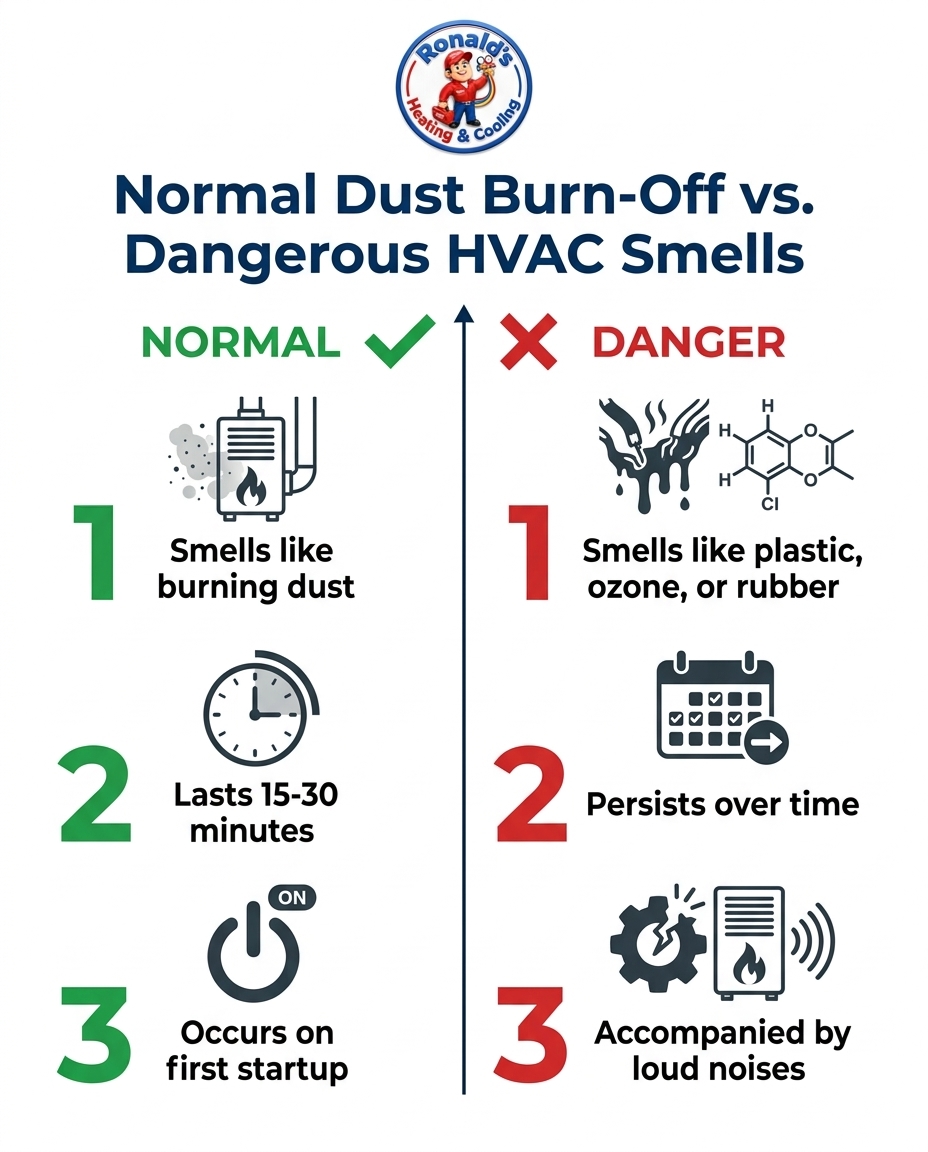
Setting clear expectations for the first heating cycle of the year can save you a lot of unnecessary stress. Normal dust burn-off has a very predictable timeline. In most homes, the burning dust odor typically dissipates within 15 to 30 minutes of that very first heating cycle. Once the accumulated layer of summer dust is fully incinerated, the smell will fade, and your system will pump out clean, odor-free warmth for the rest of the winter.
The quick fix for ventilation: Because the smell can be overwhelming in smaller homes or enclosed spaces, you do not have to just sit there and breathe it in. The best approach is to open a few windows to create a cross-breeze, helping to ventilate the home while the system clears itself out. You can also turn on ceiling fans to help disperse the odor faster.
Tracking the Burn-Off Timeline
If you are monitoring your system on that first chilly October night, here is a breakdown of what to expect as the cycle progresses:
• 0 - 5 Minutes — Expected Smell Intensity: Strongest. Sudden burst of burning dust smell from all vents. — System Status: Heating elements reaching peak temperature, initial burn-off begins.
• 5 - 15 Minutes — Expected Smell Intensity: Moderate. Smell begins to thin out but remains highly noticeable. — System Status: Majority of caked-on dust has incinerated; lingering odor in ducts.
• 15 - 30 Minutes — Expected Smell Intensity: Faint to None. Smell is barely detectable unless standing near a vent. — System Status: Burn-off complete. System is operating normally.
• 30+ Minutes — Expected Smell Intensity: None. Air should smell neutral and warm. — System Status: If smell remains strong, shut down the system and call a professional.
If the smell persists beyond the first few cycles, or if it disappears and then suddenly comes back a week later, it warrants further investigation. Dust does not accumulate fast enough to cause a second burn-off event in the same season, meaning a recurring smell points to a mechanical or electrical issue.
Warning Signs: When a Smell Indicates a Real HVAC Danger
While burning dust is a harmless nuisance, other odors are serious warning signs that your equipment is failing. Empowering yourself to differentiate between safe, organic dust smells and dangerous mechanical failures is crucial for your family's safety. If you detect any of the danger smells listed below, do not wait to see if they go away. Immediately turn off your thermostat and cut the power to the unit at the breaker box.
• Burning plastic: This odor is sharp, chemical, and highly unnatural. It usually indicates that a wire casing is melting due to an electrical short, or a plastic component has fallen against the heat exchanger.
• Electrical ozone: Often described as smelling like a blown fuse, a lightning strike, or metallic sparks. This is a severe warning sign of an overheating blower motor or a failing electrical relay.
• Melting rubber: A distinct scent resembling burning tires. This almost always points to a seized mechanical component, such as a slipping or melting rubber belt inside older air handlers.
Smells You Should Never Ignore
Electrical ozone and melting plastic are the two most critical warning signs. Attempting DIY electrical diagnostics when you smell ozone is incredibly dangerous and can lead to severe injury or further property damage. Severe malfunctions, like a seized blower motor or fried internal wiring, require professional intervention from a licensed technician.
We understand that calling for repairs can be stressful, but a reputable company will provide honest diagnostics to identify the true source of the smell without using fear-mongering sales tactics. For example, one homeowner reached out to us last fall when their HVAC system was completely messed up and emitting a harsh, continuous odor. They wisely shut it down instead of forcing it to run. Our team came out, properly diagnosed a total mechanical failure, and ultimately replaced the entire HVAC system, ensuring their home was safe and comfortable with no further issues. Always trust your nose—if it smells like chemicals, plastic, or wires, shut it down.
Proactive Steps for Better Indoor Air Quality Next Fall
If you want to avoid the harsh smell of burning dust on that first chilly October night next year, the solution is to minimize the amount of dust floating through your home year-round. Reducing airborne particles means there is simply less debris available to settle on your heating elements during the summer.
1. Upgrade your filtration strategy: Standard fiberglass filters do very little to stop microscopic dust from reaching your equipment. Switching to a pleated filter with an appropriate MERV rating captures more skin cells, dander, and lint before they can cake onto the heat exchanger.
2. Change the filter right before startup: Make it a habit to replace your air filter immediately before turning on the heat for the first time. A fresh filter ensures maximum airflow, which helps the system run cooler and push the initial burn-off odors out of the house much faster.
3. Keep the house clean during summer: Regular vacuuming with a HEPA filter and dusting with damp cloths reduces the overall particulate load in your home's air.
4. Invest in active air purification: Upgrading your indoor air quality with active solutions like UV lights, air scrubbers, or whole-home media cabinets can drastically reduce household dust, dander, and lingering odors. These systems actively pull contaminants out of the air, protecting both your lungs and your HVAC equipment.
Is It Just Dust, or Does Your System Need a Replacement?
Sometimes a persistent burning smell is not just a passing seasonal issue; it is a symptom of a system reaching the end of its functional lifespan. As HVAC units age, the internal components undergo significant wear and tear. Older systems may begin to emit continuous electrical smells as wire insulation degrades, capacitors bulge, or blower motors slowly burn out due to excessive friction.
If a burning smell in your Virginia Beach coastal areas home is accompanied by loud grinding noises, screeching metal, or a complete lack of warm air coming from the vents, the unit may be actively failing. A motor that is grinding is working twice as hard to turn, which creates excess heat and melts the surrounding protective casings. When repairs become too frequent or too severe, a professional heating installation might be necessary to restore safety and reliability to your home.
Because your heating and cooling systems are interconnected, replacing a failing furnace or heat pump often means upgrading the entire system. Homeowners facing a full system replacement often evaluate their options carefully, such as choosing between a 14 SEER and 18 SEER AC replacement for the cooling side of their new setup. Making a smart, integrated choice ensures that your home stays comfortable and odor-free in every season.
Frequently Asked Questions About Fall Heating Smells
How long does it take for the burning smell to go away when you turn on the heat?
The burning dust smell typically takes 15 to 30 minutes to completely dissipate. This timeframe allows the system to reach its peak operating temperature and incinerate the accumulated summer dust on the heat exchanger. If the odor continues to blow strongly through your vents after an hour, you should shut the system down and have it inspected.
What does an electrical fire smell like in a heater?
An electrical fire in a heater smells like sharp ozone, melting plastic, or metallic sparks. Unlike the organic, earthy smell of burning dust, an electrical odor is highly chemical and acrid. It will often sting your nose and may be accompanied by a popping sound or the system repeatedly tripping its circuit breaker.
Is it normal for a heater to smell like burning plastic?
No, it is never normal for a heater to smell like burning plastic. This odor strongly indicates that wire casings are melting, a plastic component has fallen into the heating chamber, or a motor is dangerously overheating. You should immediately turn off the thermostat and call a licensed professional to prevent further damage or a potential fire hazard.
Why does my heat pump smell when I turn it on?
Your heat pump smells when you first turn it on because dust, pet dander, and household lint have settled on the internal heating coils during the months it was not in use. When the auxiliary heating strips activate for the first time, they instantly burn off this debris. This is a normal part of the seasonal transition and should clear up shortly.
How can I prevent the burning dust smell next fall?
You can prevent the burning dust smell next fall by improving your home's air filtration and keeping the system clean. Swap out your air filter for a high-quality pleated version before that first chilly October night, and consider investing in whole-home air purifiers. Routine professional maintenance also helps clean off excess debris before you ever turn the heat on.
Expert Guidance for a Safe and Comfortable Heating Season
Experiencing a sudden burning odor in your home is never a pleasant experience, but knowing what to expect can bring you peace of mind. To recap, a brief, earthy dust smell lasting 15 to 30 minutes is a completely normal part of starting up your system. However, persistent chemical odors, melting plastic, or electrical ozone are clear warning signs that should never be ignored. Living in Virginia Beach coastal areas means dealing with stubborn, humidity-caked dust, but it does not mean you have to compromise on safety.
We always encourage readers to prioritize their family's safety by having a professional inspect any suspicious or lingering smells. If you are ever in doubt about what your nose is telling you, reach out for an honest, transparent system evaluation. We are here to provide the expert home maintenance tips and troubleshooting you need to enjoy a warm, comfortable, and worry-free winter season.
