





The Chilly Reality of Uninsulated Sunrooms Before Winter Hits
As the November pre-winter transition settles in, understanding exactly how a ductless mini split heats a room becomes a top priority for homeowners staring down a cold, unusable home addition. The brisk weather shift quickly exposes the architectural vulnerabilities of sunrooms, enclosed porches, and finished rooms over garages. What served as a beautiful, sunlit retreat during the mild days of early autumn suddenly transforms into an icebox that drains warmth from the rest of the house.
A typical pattern we see during diagnostic inspections is the realization that traditional central heating simply cannot reach these isolated spaces effectively. Extending existing ductwork is often physically impossible or structurally cost-prohibitive. Even when ducts can be extended, the main furnace is rarely sized to handle the additional square footage, leading to weak airflow and imbalanced temperatures across the entire home.
Modern heating solutions, however, do not necessarily require extending your home's existing ductwork to deliver reliable comfort. By exploring ductless mini-split systems, you can bypass the limitations of central forced air and deliver targeted warmth exactly where it is needed. For homeowners considering mini-split installation in Virginia Beach, the first step is understanding the underlying physics of why these peripheral rooms get so cold in the first place, and how ductless technology uniquely solves this architectural challenge.
Why Home Additions Lose Heat Faster Than the Rest of the House
To understand why a sunroom remains stubbornly cold, we have to look at the physics of heat loss. Unlike the core living spaces of a house, home additions often lack the same thermal mass and structural insulation. When brisk coastal winds sweep through neighborhoods in Virginia Beach, they aggressively strip heat away from rooms that have multiple exterior-facing walls.
Simply leaving the door open to the main house is rarely sufficient for maintaining comfort. The central thermostat, located in a well-insulated hallway, shuts off the furnace long before the peripheral sunroom reaches a comfortable temperature. This leaves you with a space that is perpetually lagging behind the rest of the home.
The Insulation Deficit in Peripheral Rooms
Standard construction vs. sunroom construction: The main structure of a home is built with thick, insulated walls, an insulated foundation, and a heavily insulated attic. Sunrooms and enclosed porches are typically built with expansive glass windows and thinner wall profiles. Even double-paned glass offers a fraction of the thermal resistance (R-value) of a standard insulated wall.
The problem of thermal bridging: Heat naturally moves toward cold. In an uninsulated or under-insulated addition, the structural framing members (like wood studs and metal window frames) act as thermal bridges. They physically conduct the warmth from the inside of the room directly to the cold outside air. The more exterior surface area a room has, the faster this heat transfer occurs.
The Inefficiency of Space Heaters
When faced with a freezing room, many homeowners instinctively turn to portable electric space heaters. While they offer a temporary blast of warmth, they are fundamentally flawed as a permanent solution.
• High operational costs: Space heaters generate heat through electrical resistance, much like a giant toaster. For every unit of electricity consumed, they produce exactly one unit of heat. This 1:1 ratio makes them incredibly expensive to run continuously.
• Safety limitations: Portable units pose significant fire hazards if tipped over or placed too close to curtains and furniture. They are not designed for unattended, round-the-clock operation.
• Poor heat distribution: A space heater only warms the immediate area around it. Because they lack powerful fans, the heat stratifies, leaving your feet freezing while the ceiling gets warm.
• Portable Space Heater — Heat Source Mechanism: Electrical Resistance — Efficiency Profile: Low (1:1 energy conversion) — Airflow Delivery: Highly localized, poor circulation
• Central Duct Extension — Heat Source Mechanism: Existing Furnace — Efficiency Profile: Moderate (subject to duct loss) — Airflow Delivery: Often weak at the end of the line
• Ductless Mini-Split — Heat Source Mechanism: Ambient Outdoor Heat — Efficiency Profile: High (transfers heat rather than generating it) — Airflow Delivery: Targeted, powerful forced-air distribution
The Reverse-Cycle Process: How a Ductless Mini Split Heats a Room
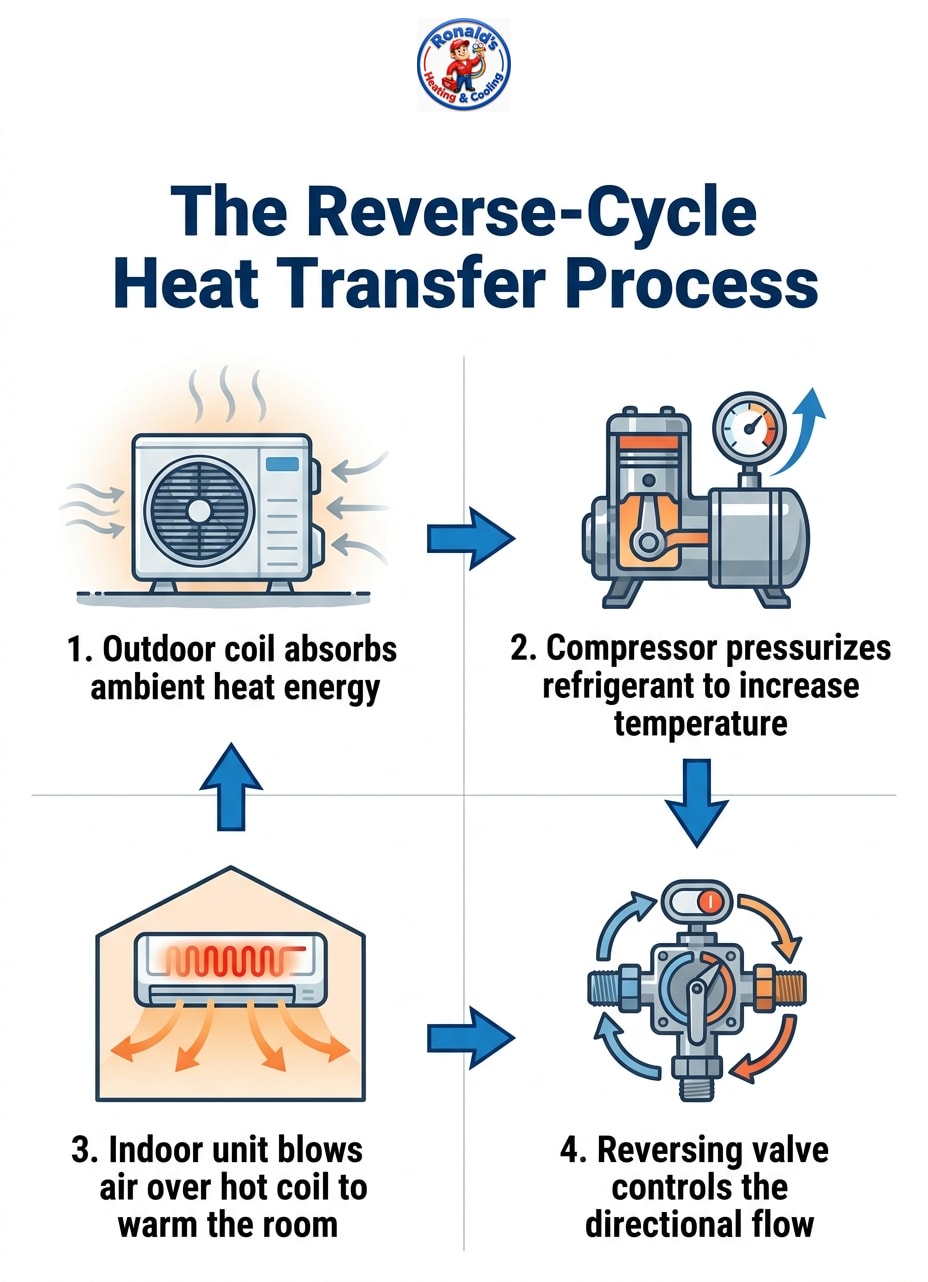
The secret to heating an isolated space efficiently lies in abandoning the idea of generating heat and embracing the science of transferring it. Ductless mini-splits are heat pumps. During the summer, they absorb heat from inside your home and pump it outside. In the winter, a component called the reversing valve physically shifts the direction of the refrigerant flow, allowing the system to run in reverse.
During the November pre-winter transition, when temperatures begin to drop steadily, this reverse-cycle process is what allows a mini-split to provide powerful, consistent warmth without burning fossil fuels or relying on inefficient electrical resistance. Here is the step-by-step breakdown of how this heat transfer occurs.
Step 1: Absorbing Ambient Outdoor Heat
It sounds counterintuitive, but even when the air outside feels freezing, it still contains a significant amount of thermal energy. Absolute zero—the point where all heat energy ceases to exist—is -459.67°F. Therefore, air at 35°F still holds plenty of usable heat.
In heating mode, the outdoor condenser coil acts as an evaporator. The system circulates a specialized liquid refrigerant through this outdoor coil. Because the refrigerant is engineered to be much colder than the outdoor air, heat energy from the outside air naturally flows into the refrigerant, causing it to boil and turn into a low-pressure gas.
Step 2: Compressing the Refrigerant
Once the refrigerant has absorbed ambient heat and turned into a gas, it travels to the compressor. The compressor is the heart of the system. It forcefully squeezes the low-pressure gas, packing the molecules tightly together.
According to the laws of thermodynamics, when you increase the pressure of a gas, you simultaneously increase its temperature. The compressor takes that mildly warm gas and pressurizes it until it becomes a blistering hot, high-pressure gas, ready to be moved indoors.
Step 3: Delivering Forced-Air Warmth Indoors
This superheated refrigerant gas travels through a small, insulated copper line set into the indoor air handler mounted on your sunroom wall. The indoor unit features a powerful, variable-speed fan that draws the cold room air over the hot refrigerant coil.
As the cold room air blows across the hot coil, the heat transfers from the refrigerant into the air, blowing targeted warmth directly into the room. Having lost its heat, the refrigerant condenses back into a cold liquid and travels back outside to repeat the cycle continuously.
Extracting Heat from Cold Air: Defeating the Damp Coastal Chill
One of the most challenging aspects of winter heating in a coastal environment is the dampness. In Virginia Beach, the damp coastal winter climate creates a specific type of cold that sinks into your bones. High humidity increases the thermal conductivity of the air, meaning a damp 40-degree day pulls body heat away from your skin much faster than a dry 20-degree day in the mountains.
This difference between perceived comfort (the damp chill) and absolute temperature (available heat energy) is exactly why heat pumps excel in these environments. While the damp air feels freezing to a human, the mini-split's outdoor unit easily extracts the abundant thermal energy present in that 40-degree air.
Furthermore, the targeted, forced-air nature of a ductless unit is highly effective at cutting through dampness inside a room. By actively circulating warm, conditioned air, the system disrupts the stagnant, cold boundary layer of air in an uninsulated space. The constant circulation not only raises the ambient temperature but also helps manage indoor humidity, making the room feel significantly warmer. For homeowners researching options for adding a mini-split for a drafty room, this ability to overcome damp coastal chill is a primary benefit.
Why Proper Airflow Diagnostics Precede Equipment Selection
A common mistake in heating uninsulated additions is guessing the equipment size based solely on the room's square footage. A 300-square-foot interior bedroom requires vastly different heating capacity than a 300-square-foot sunroom surrounded by glass.
This is where thorough, honest diagnostic practices make all the difference. An expert diagnostic inspection involves actually inspecting the space, understanding the specific airflow challenges, and solving the root comfort issue rather than just pushing a generic equipment sale. Especially during the November pre-winter transition, accurately measuring heat loss is critical to ensuring the room stays warm in January.
Evaluating Existing Insulation and Drafts
• Identifying thermal boundaries: We assess where the room loses the most heat, paying close attention to uninsulated floors over crawlspaces and thin ceiling structures.
• Factoring window quality: The thermal load calculation must account for the number of panes, the framing material, and the total surface area of the glass.
• Measuring infiltration rates: Drafty doors and poorly sealed window sashes introduce constant streams of cold air that the heating system must overcome.
Mapping Airflow Patterns
• Strategic unit placement: The indoor air handler must be positioned to project warm air across the entire space without blowing directly onto seating areas.
• Avoiding short-cycling: If the unit is placed too close to an opposing wall or a ceiling fan, the warm air can bounce back to the unit's sensor, tricking it into shutting off prematurely.
• Evaluating ceiling height: Vaulted ceilings trap heat at the top of the room, requiring specific louver adjustments on the mini-split to force the warm air down to the living level.
Ensuring Long-Term Reliability for Your Zoned Heating
Because ductless mini-splits operate as both your primary cooling and heating source for a zoned space, they run nearly year-round. This continuous operation requires consistent maintenance to protect the system's high energy efficiency and ensure reliable performance throughout the winter.
Protecting the outdoor unit: The outdoor condenser must be kept clear of winter debris, fallen leaves, and frost buildup. Heat pumps have a built-in defrost cycle to melt ice off the coils, but if the unit is buried in debris or blocked by overgrown shrubs, the airflow is restricted, forcing the compressor to work much harder to extract heat from the Virginia Beach air.
Maintaining indoor airflow: The indoor air handlers rely on washable mesh filters to protect the internal coil from dust and pet hair. Because these systems move a massive volume of air, these filters should be checked and cleaned monthly during peak heating season. A clogged filter severely reduces the unit's ability to project heat into the room.
Professional winterization check-ups: Before the coldest weather hits, a professional inspection is vital. Technicians verify that the reversing valve shifts smoothly, test the electrical components, and ensure the refrigerant charge is exact. Even a minor refrigerant leak will drastically reduce heating output. Staying proactive with mini-split repair services prevents unexpected breakdowns when you need the warmth the most.
Frequently Asked Questions About Mini-Split Winter Heating
How does a mini split heat when it is cold outside?
A mini-split heats by extracting thermal energy from the outside air, even in near-freezing temperatures. It circulates a very cold refrigerant through the outdoor coil, allowing it to absorb ambient heat, which is then compressed to a high temperature and blown indoors. Because it transfers heat rather than generating it, the process remains highly efficient regardless of the chill.
Can a mini split heat an uninsulated sunroom?
Yes, a mini-split can effectively heat an uninsulated sunroom provided it is sized correctly for the specific heat load. Because sunrooms lose heat rapidly through glass and uninsulated walls, the unit must have enough BTU capacity to overcome that continuous heat loss. A proper diagnostic evaluation is required to match the equipment to the room's precise thermal weaknesses.
Do mini splits use a lot of electricity for heating?
No, mini-splits are among the most energy-efficient heating options available because they do not rely on electrical resistance. Instead of burning fuel or converting electricity directly into heat, they use a small amount of electricity to power the compressor and fans to move existing heat. This allows them to deliver significantly more heat energy than the electrical energy they consume.
At what temperature does a mini split stop heating?
Modern cold-climate mini-splits can continue to extract heat from outdoor air at temperatures well below zero degrees Fahrenheit. While standard units may see a drop in efficiency as temperatures approach freezing, specialized hyper-heating models are engineered to maintain 100% heating capacity even when the outside temperature drops into the single digits.
How does damp coastal air affect heat pump efficiency?
Damp coastal air actually contains plenty of thermal energy for a heat pump to extract, but high humidity can cause frost to form on the outdoor coil more frequently. The mini-split manages this automatically by periodically running a brief defrost cycle to melt the frost. In environments like Virginia Beach, the system easily overcomes the damp chill to provide dry, comfortable heat indoors.
Bringing Reliable Warmth to Your Coldest Rooms
Understanding heat pump mechanics is the first critical step to reclaiming a cold, isolated room. Once you realize that warmth can be efficiently transferred from the outside air without the need for destructive ductwork extensions, solving the comfort issues in your home addition becomes straightforward. The November pre-winter transition is the ideal time to address these drafty spaces before the deep freeze sets in.
By relying on targeted, ductless heat transfer, you can turn an icy sunroom back into a comfortable living space. We encourage homeowners to seek a professional diagnostic evaluation to map their room's specific airflow and heat loss. With an honest assessment of your space, you can secure a permanent heating solution that keeps your coldest rooms reliably warm all winter long.
