





That First Fall Beep: Is It Startup Fumes or a Real Emergency?
With early fall arriving and temperatures finally dropping, you might be wondering exactly why your carbon monoxide detector beeps when the heat kicks on for the very first time this season. It is a terrifying moment for any homeowner. You walk over to the thermostat in September, switch the system from cooling to heating, and within minutes, a piercing alarm shatters the quiet of your home. The immediate panic is entirely justified, but understanding the difference between harmless startup conditions and a genuine, life-threatening emergency is critical for your family's safety.
When you need reliable heating services or require urgent furnace repair in Virginia Beach, the first step is always diagnosing the true source of the problem safely. The decision point you face during that first early fall heating cycle is whether to dismiss the alarm as just "startup fumes" or to treat it as a deadly hazard. Here is the most important rule: carbon monoxide is a completely colorless, odorless, and tasteless gas. Your sensory organs cannot detect it. That small plastic detector on your wall or ceiling is literally your only line of defense against a silent threat.
Homeowners often assume that an alarm sounding during the first heating cycle of the year is simply a false positive caused by dust burning off the system. This assumption can be incredibly dangerous. A functioning carbon monoxide alarm should never be ignored, silenced without investigation, or casually blamed on dirty vents. If the alarm is sounding, it is either detecting a specific mechanical failure within your system or warning you of a hazardous gas leak that requires immediate professional intervention.
Immediate Safety Steps: What to Do When the Alarm Sounds
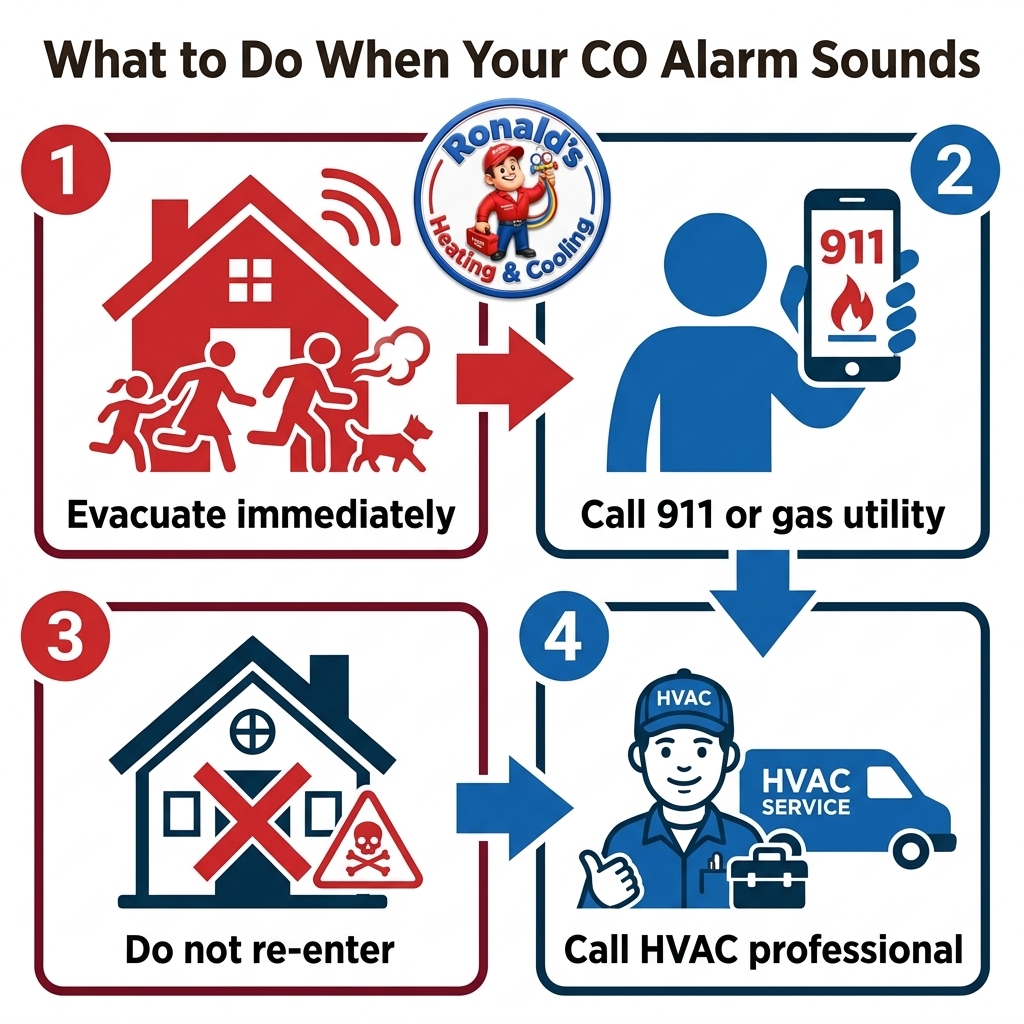
If your carbon monoxide alarm goes into a full, continuous alert during that early fall first heating cycle, you must treat it as a verified emergency. Do not attempt to investigate the furnace yourself, and do not waste time trying to guess if the alarm is broken. Follow these exact steps to ensure the safety of everyone in the building.
1. Evacuate the home immediately: Stop whatever you are doing. Gather all family members, children, and pets, and move outside to fresh air. Do not take time to pack bags or gather belongings. Your primary goal is to get everyone out of the enclosed environment as quickly as possible.
2. Call emergency services: Once you are safely outside the home, dial 911 or contact your local gas utility company's emergency line. First responders have specialized, highly sensitive equipment that can measure the exact parts-per-million (PPM) of carbon monoxide in your home's air.
3. Do not re-enter the building: Stay outside until emergency responders arrive and explicitly clear the building. A common mistake homeowners make is running back inside to open windows or turn off the furnace. Opening windows can actually disperse the gas, making it much harder for the fire department to locate the source of the leak when they arrive.
4. Keep the system off until inspected: Once emergency services have ventilated the home and declared it safe to re-enter, they will likely shut off the gas supply to your heating system. Do not turn the heat back on under any circumstances until a licensed HVAC professional has performed a comprehensive diagnostic and repaired the underlying fault.
What to Do vs. What Not to Do
• Evacuate to fresh air immediately. — Dangerous Mistake: Staying inside to search for the smell.
• Call 911 from outside the house. — Dangerous Mistake: Assuming the alarm is just a false positive.
• Leave doors and windows as they are. — Dangerous Mistake: Opening windows (makes finding the leak harder).
• Wait for a licensed HVAC professional. — Dangerous Mistake: Trying to inspect the furnace yourself.
The "Dust Burn-Off" Myth vs. Actual Carbon Monoxide
One of the most persistent and dangerous myths in home maintenance is the idea that burning dust can trigger a carbon monoxide alarm. To understand why this is false, we have to look at what actually happens inside your system after it sits idle for months.
Throughout the spring and summer, your furnace is inactive. During this time, household dust, pet dander, and microscopic debris settle on the internal components, including the burners and the exterior of the heat exchanger. When you finally switch the thermostat to "heat" in early September, the system fires up and incinerates that accumulated debris. This process absolutely creates a distinct, temporary odor that spreads through your vents. You might also notice weird smells when you first turn on the heat, such as a stale, dusty, or slightly metallic scent.
The critical difference: Burning dust creates a smell, but it does NOT produce carbon monoxide gas. A functioning CO detector is calibrated to sense carbon monoxide molecules, not airborne dust particles or smoke from incinerated dander.
If your detector is beeping, it is detecting a hazard or a system fault, not just burning dust. Carbon monoxide is entirely odorless. You cannot smell a CO leak. If you smell burning dust and the alarm sounds at the same time, it means two separate things are happening: your furnace is burning off summer debris, AND there is a mechanical failure allowing combustion gases to escape into your breathable air. Never let the presence of a dusty smell trick you into ignoring a blaring safety alarm.
The Hidden Culprit: Cracked Heat Exchangers
If the alarm isn't caused by dust, what is the mechanical reason behind these early fall emergencies? In the vast majority of cases, the culprit is a compromised heat exchanger. Understanding how this component works reveals exactly why leaks happen during the first heating cycle of the year.
The heat exchanger is the metal chamber inside your furnace where the actual combustion takes place. Its job is to separate the toxic combustion gases (including carbon monoxide) from the clean air that gets blown into your living spaces. As the burners heat the metal chamber, the blower pushes air over the outside of the chamber, warming the air before it travels through your ductwork. The toxic gases inside the chamber are then safely vented out of your home through the exhaust flue.
The Role of Metal Expansion
When metal heats up, it expands. When it cools down, it contracts. Over thousands of heating cycles, this constant expansion and contraction causes metal fatigue. Eventually, microscopic hairline cracks can form in the heat exchanger walls.
Here is why this is particularly relevant to the Virginia Beach coastal climate: our high summer humidity accelerates rust and oxidation on idle indoor furnace components. Throughout the humid summer months, a tiny, unnoticed crack in your heat exchanger can rust and weaken. When you finally fire up the furnace in September, the sudden, intense heat causes the weakened metal to expand rapidly. That microscopic crack suddenly opens wide, allowing toxic carbon monoxide to escape the combustion chamber and enter the airstream circulating into your home.
The insidious part of this failure is that once the system shuts off and cools down, the metal contracts, and the crack shrinks back down. This makes it incredibly difficult to spot with the naked eye, which is why specialized diagnostic tools are required to verify the integrity of the heat exchanger.
Other Reasons Your Detector Might Be Beeping
While a cracked heat exchanger is a severe and common cause of CO leaks during the first heating cycle, it is not the only reason your alarm might sound. Detectors communicate different issues through different beep patterns. Understanding these patterns can help you communicate effectively with emergency responders and HVAC technicians.
• Low Batteries (The Intermittent Chirp): If your detector emits a single, high-pitched chirp every 30 to 60 seconds, it is usually indicating that the batteries are running low. This is completely different from a full, continuous alarm (usually 3 or 4 rapid beeps followed by a pause). Always replace the batteries immediately when you hear the low-battery chirp.
• End of Life Warning: Most modern carbon monoxide detectors have a built-in lifespan of 5 to 7 years. The internal sensors degrade over time and lose their accuracy. When the unit reaches its expiration date, it will sound a specific end-of-life warning chirp (refer to the back of the unit or the user manual for the exact pattern). If your detector is past its expiration date, it must be replaced entirely; new batteries will not fix it.
• Blocked Exhaust Flues: Over the summer, birds, squirrels, or insects often build nests in the exhaust pipes leading out of your home. Storm debris and heavy winds can also block these vents. If the exhaust flue is obstructed, the toxic combustion gases have nowhere to go. They will backdraft into your home, rapidly filling the space with carbon monoxide and triggering the alarm.
• Malfunctioning Gas Appliances: While the furnace is a common suspect, other gas appliances like water heaters, gas stoves, or gas dryers can also produce carbon monoxide if they are poorly ventilated or malfunctioning.
Why Professional Diagnostics Are Non-Negotiable
When a carbon monoxide alarm sounds, the situation moves past the realm of DIY troubleshooting. Inspecting a furnace for CO leaks requires a licensed professional. Heat exchangers cannot be safely inspected, patched, or repaired using online tutorials or hardware store sealants.
Licensed technicians use specialized equipment to find the microscopic cracks that cause these leaks. A visual inspection is rarely enough. Professionals use combustion analyzers to measure the exact chemical makeup of the exhaust gases, and high-definition inspection cameras to snake deep into the heat exchanger cells to visually confirm structural failures. Without these tools, a dangerous crack can easily go unnoticed until it causes a tragedy.
We know that facing a potential gas leak is incredibly stressful. Homeowners are often panicked, not just about their family's safety, but about the potential cost of a major repair. Ronald's Heating & Cooling provides trustworthy, safety-first diagnostics without high-pressure sales tactics. We believe in finding the exact root cause of the problem and explaining your options clearly.
A pattern we see often: One homeowner reached out to us during a sudden winter cold snap when their heater unexpectedly failed. Because safety and comfort are priorities, a technician arrived within an hour, thoroughly explained the issue without any pressure, secured the needed parts, and had the system safely running again in a short amount of time. Whether you need an emergency diagnostic or a standard furnace repair in Chesapeake, you deserve a team that puts your safety and peace of mind first.
Preventing Future Alarms with Proactive Care
The best way to handle a carbon monoxide alarm is to prevent the conditions that cause it in the first place. Transitioning from reactive panic to proactive prevention ensures that your early fall heating startup is uneventful and comfortable.
The most effective strategy is scheduling a comprehensive inspection before the weather turns cold. During a pre-season tune-up, a technician does much more than just change the filter. They test all safety limits, clean the burners to ensure proper combustion, inspect the exhaust flue for summer blockages, and most importantly, perform a rigorous check of the heat exchanger.
Regular maintenance catches rust, minor oxidation, and early signs of metal fatigue before they develop into dangerous, expanding cracks. In the Virginia Beach coastal climate, where salt air and humidity constantly attack metal components, this annual check is vital. By enrolling in a routine preventative maintenance plan, you ensure that a professional lays eyes on your system's critical safety components every single year, long before you flip the switch on that first chilly September morning.
Frequently Asked Questions About Heating and Carbon Monoxide
Can a dirty furnace cause a carbon monoxide detector to go off?
A dirty furnace filter alone won't create carbon monoxide, but severe neglect can lead to a chain reaction that does. If airflow is severely restricted by dirt, the furnace can overheat. Chronic overheating stresses the metal heat exchanger, eventually causing it to crack. Once that crack forms, carbon monoxide will leak into the home and trigger the alarm. Regular cleaning prevents this dangerous overheating cycle.
What should I do if my CO detector goes off when the heat kicks on?
You must evacuate the home immediately and call emergency services. Do not stay inside to open windows, and do not attempt to turn off the furnace yourself. Once you are safely outside, call 911 or your local gas utility. Do not re-enter the building or use the heating system again until a licensed HVAC professional has cleared it and repaired the underlying issue.
Can dust set off a carbon monoxide detector?
No, burning dust will not trigger a functioning carbon monoxide detector. While dust burning off the heat exchanger during the first fall startup creates a noticeable, unpleasant smell, it does not produce carbon monoxide gas. CO detectors are designed to sense specific gas molecules. If the alarm sounds, it is detecting a real hazard or experiencing a mechanical fault, not just reacting to dusty air.
How do I know if my furnace is leaking carbon monoxide?
Because carbon monoxide is completely odorless, invisible, and tasteless, the only reliable ways to know are a functioning CO detector or a professional diagnostic. You cannot smell a leak, and physical symptoms (like headaches, dizziness, or nausea) often mimic the flu. Relying on a wall-mounted detector and scheduling annual professional combustion analysis are the only safe ways to monitor for leaks.
Why does my carbon monoxide detector beep 3 times?
Three or four rapid beeps followed by a pause usually indicates a full emergency alarm, meaning actual carbon monoxide has been detected. This is a critical warning to evacuate. In contrast, a single intermittent chirp usually means the battery is low or the unit has reached the end of its 5-to-7-year lifespan. Always check your specific manufacturer's guide, but treat all full, repeating alarm patterns as immediate emergencies.
Don't Guess With Your Safety: Schedule a Heating Inspection
When it comes to the air your family breathes, guessing is never an option. If your carbon monoxide detector sounded during that first fall heating cycle, clear, immediate safety action is your absolute priority. Evacuate, call the authorities, and let the professionals handle the rest.
Even if you haven't turned your system on yet this season, now is the time to ensure it is safe to operate. Don't wait for a blaring alarm to tell you something is wrong with your heat exchanger. Schedule an expert, no-pressure safety diagnostic and inspection before the cold weather fully sets in, so you can enjoy the winter months with complete confidence.
