





Why Does Your Home Smell Like Mildew When the Heat Kicks On?
Did you just switch your thermostat from cool to heat for the first chilly night of the season, only to be hit with a sudden, musty odor blasting through the vents? Understanding the mildew smell when you first turn on the heat: causes and solutions is essential for any homeowner trying to figure out if their system is blowing mold into the house or just shaking off the summer dust. That blast of foul air causes immediate anxiety, especially when you are simply trying to keep your family warm during the late September / early fall transition. You might instantly worry about the health of your indoor air or fear a massive repair bill is looming.
Here is the thing: while that sudden odor is definitely alarming, our team at Ronald's Heating & Cooling knows that the root causes are very well-understood and highly treatable. The most important step right now is distinguishing between harmless seasonal burn-off and actual biological growth inside your ductwork. If you need immediate professional assistance, you can always rely on our heating services to restore your comfort, but read on to understand exactly what we typically see happening behind your vents.
The Science Behind That First Late-September Heating Cycle
To understand why your house suddenly smells like a damp basement, you have to look at what your HVAC system was doing all summer. Your indoor evaporator coil is the component responsible for absorbing heat and pulling humidity out of your home's air. During peak cooling season, this coil sits in the dark, constantly dripping with condensation. It is a wet, cold environment that runs continuously for months.
When the weather starts to cool down and your system sits idle before the first freeze in late September / early fall, that residual moisture remains on the coil. Airborne dust, pet dander, and microscopic debris settle onto the damp components. When you finally ignite the furnace for the very first time, the system rapidly heats up, literally baking the accumulated dust and biological residue that has been sitting stagnant for weeks.
The indoor air quality factor: Most homeowners do not realize that indoor air can be two to five times more polluted than outdoor air. The particles circulating through your home end up trapped in the HVAC system. When the heat kicks on, all those trapped particles react to the sudden temperature spike. If this mechanical transition leads to performance issues or strange noises alongside the smell, scheduling furnace repair in Virginia Beach with our experienced technicians ensures your system operates safely through the winter.
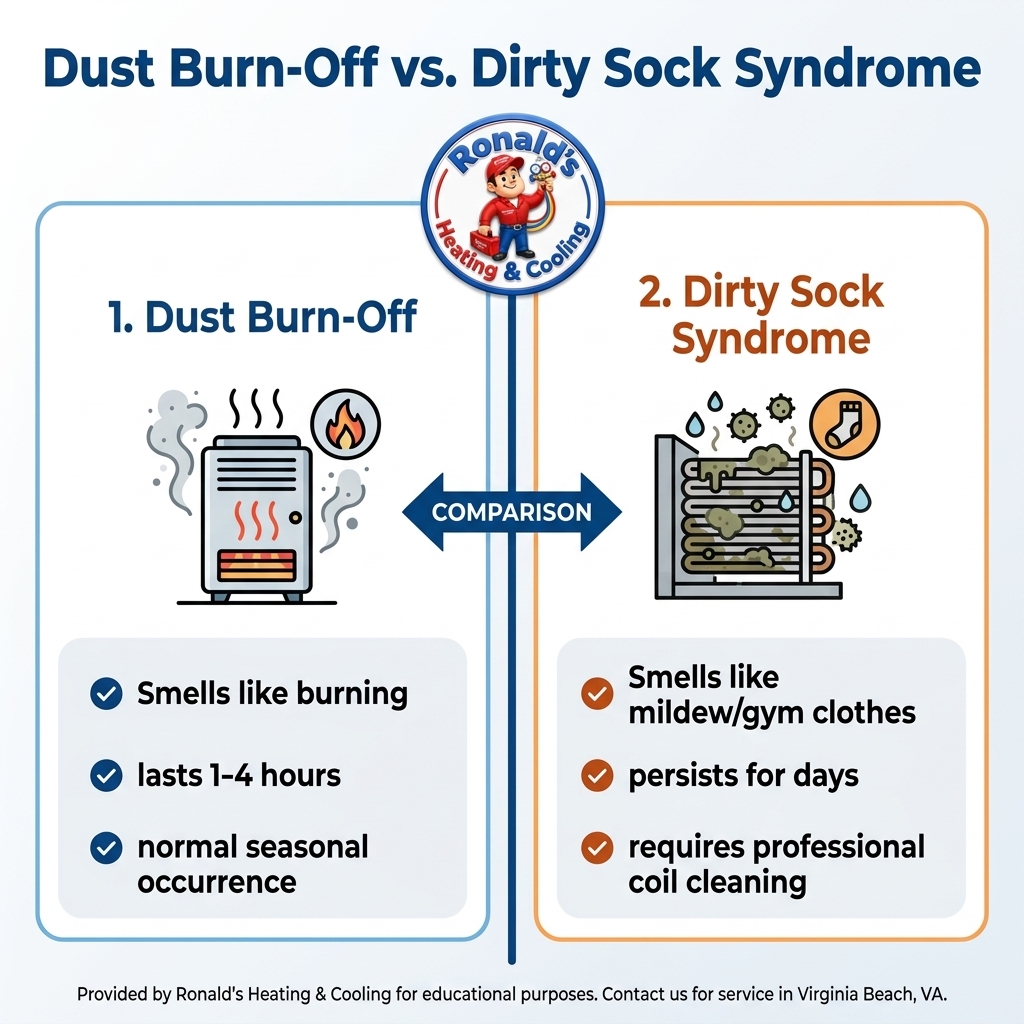
Dust Burn-Off vs. Dirty Sock Syndrome: Spotting the Difference
Not all heating odors are created equal. Homeowners need to know how to self-triage the smell to determine if they should simply wait it out or pick up the phone. The two most common culprits we encounter are standard dust burn-off and a more persistent issue known in the HVAC industry as "Dirty Sock Syndrome."
• Odor Profile — Normal Dust Burn-Off: Smells like dry, burning dust or a hot electrical element. — Dirty Sock Syndrome: Smells like sweaty gym clothes, wet dog, or damp mildew.
• Duration — Normal Dust Burn-Off: Fades entirely within 1 to 4 hours of continuous operation. — Dirty Sock Syndrome: Persists for days or returns every time the heat cycles on.
• Root Cause — Normal Dust Burn-Off: Settled household dust baking on the heat exchanger. — Dirty Sock Syndrome: Bacterial and microbial growth on the indoor evaporator coil.
• Required Action — Normal Dust Burn-Off: Open a window and wait for it to clear naturally. — Dirty Sock Syndrome: Requires professional coil cleaning and sanitization.
Signs of Normal Seasonal Dust Burn-Off
If your system is just dealing with standard dust, the smell will be distinct but relatively short-lived. In our years of servicing HVAC systems across the Virginia Beach coastal region, we assure customers this is a completely normal part of homeownership.
• The scent is dry: It smells more like a hot toaster or burning lint rather than wet mold.
• It fades quickly: As the system runs, the dust incinerates, and the smell should noticeably dissipate within a few hours.
• No lingering effects: Once the initial burn-off is complete, subsequent heating cycles will smell totally normal.
Symptoms of Dirty Sock Syndrome
Dirty Sock Syndrome is exactly what it sounds like—a foul, musty odor that indicates biological growth has taken root inside your system.
• The scent is damp: It smells distinctly like sweaty gym clothes, old cheese, or a damp basement.
• It is persistent: The smell does not fade after a few hours; it blasts you in the face every single time the blower motor kicks on.
• It causes physical discomfort: Sensitive family members might experience sneezing, coughing, or watery eyes when the system runs.
How Coastal Humidity Fuels Biological HVAC Growth
The environment outside your home plays a massive role in what happens inside your ductwork. In the Virginia Beach coastal region, summer humidity levels frequently exceed 70%. This heavy moisture load drastically increases the amount of condensation your indoor evaporator coil has to manage during the cooling season. Your system works overtime just to wring the water out of the air.
Because the air is so thick with moisture, the interior components of your HVAC system struggle to dry out completely between cycles. In our daily service calls, we frequently see how this heavy residual moisture creates the ultimate breeding ground for the mildew and bacteria that you eventually smell in the fall. The transition from a highly humid coastal summer to a cooler autumn creates the exact conditions necessary for dirty sock syndrome to thrive.
The long-term fix: Managing the overall moisture levels in your house is the best way to prevent this cycle from repeating year after year. By proactively focusing on home humidity control, you can keep the indoor air drier, which starves the biological growth of the moisture it needs to survive.
Timeline: How Long Is Too Long for the Smell to Linger?
When you first notice the odor in late September / early fall, your immediate question is likely, "How long do I have to put up with this?" Setting clear expectations can help you decide when patience is appropriate and when action is required.
1. The First Hour: The smell will be at its absolute strongest. If it is just dust burn-off, it will smell like a hot heating element. At Ronald's Heating & Cooling, we typically advise homeowners to open a few windows slightly during this initial period to help ventilate the home.
2. Hours 2 through 4: A normal dust burn-off odor should noticeably weaken by this point. You might still catch a faint whiff when the system cycles on, but it should not be overpowering.
3. Day 2 and Beyond: If a distinct mildew smell persists beyond the first day, or if it vanishes only to return aggressively on subsequent days, you are not dealing with normal burn-off. This is the timeline threshold where patience is no longer the right strategy.
Never ignore persistent odors. A pattern we see often is that a smell lingering for multiple days is a clear indicator of ongoing indoor air quality issues that will not resolve themselves.
Safe Solutions: When to Book Professional Diagnostics
If your timeline has passed the four-hour mark and the musty scent is still going strong, it is time to bring in an expert. The exact criteria for calling a professional include persistent mildew smells, recurring odors that happen every time the blower starts, or visible grime buildup on the accessible parts of your indoor unit.
A strict warning against DIY cleaning: Do not attempt to clean your evaporator coil with harsh household chemicals or bleach. The aluminum fins on the coil are incredibly delicate and easily crushed. Furthermore, using the wrong chemical can corrode the metal, cause refrigerant leaks, and instantly void your manufacturer's warranty. A professional will safely check the evaporator coil, the condensate drain pan, and the filtration system using specialized, non-corrosive cleaners.
Rapid response is especially important if the heating system fails or underperforms alongside the odor. Our crew sees these urgent situations frequently. For example, when one local homeowner's heater went out unexpectedly during a winter cold snap, our technician arrived within an hour, thoroughly explained the underlying issue, sourced the necessary parts, and fixed the system in a very short amount of time. When you need that level of reliable response, scheduling heating maintenance with us ensures your system is evaluated safely and correctly.
Transparent Diagnostics: What Happens During an Inspection
At Ronald's Heating & Cooling, we insist on explaining every repair step and diagnostic finding before starting any work, ensuring you understand the root cause of the problem. We believe that transparent communication is just as important as technical skill. During a summer service call, for instance, a customer required specific repairs; our technician took the time to explain every single necessary fix thoroughly before touching a wrench, ensuring the customer was completely comfortable with the process.
When one of our technicians arrives to investigate a mildew smell in the Virginia Beach coastal region, they follow a rigorous, step-by-step diagnostic process:
1. Coil Inspection: The technician visually inspects the evaporator coil for signs of bacterial growth, rust, or severe dust matting.
2. Drain Pan Assessment: They check the condensate drain pan beneath the coil. If the drain line is clogged, standing water in the pan will quickly turn stagnant and smell like a swamp.
3. Airflow Analysis: The technician measures the airflow to determine if the issue is isolated to the air handler or if biological growth has spread deep into the ductwork.
4. Clear Explanations: Before any cleaning begins, the technician will show you exactly what they found and explain the 'why' behind the recommended repair, ensuring you do not just receive a temporary band-aid fix.
Proactive Strategies to Prevent Future HVAC Odors
Troubleshooting the immediate smell is just the first step. To keep your home's air fresh year-round in the Virginia Beach coastal region, you need a proactive strategy that addresses indoor air quality before the seasons change.
• Pre-Season Preventative Maintenance: The most effective strategy is scheduling a professional tune-up in the early fall. A technician will clean the coils and clear the drain lines before the dust and biological growth have a chance to bake onto the heat exchanger.
• Professional Duct Services: If the mildew smell has been ignored for too long, the spores can spread beyond the air handler and settle into your vents. Investing in professional air duct cleaning removes the organic material that feeds the mildew, providing a fresh start for your entire system.
• High-Quality Filtration: Standard fiberglass filters do very little to stop microscopic organic matter. We recommend upgrading to a pleated filter with a higher MERV rating to trap the pet dander and dust that act as food for bacterial growth.
• Active IAQ Upgrades: For homes that constantly battle dirty sock syndrome, installing a UV germicidal light inside the air handler is a game-changer. These lights shine directly onto the evaporator coil, actively neutralizing microbial growth before it can multiply and cause odors.
Frequently Asked Questions
Why does my heater smell like mildew when I turn it on?
The mildew smell is usually caused by biological growth on your indoor evaporator coil. During the summer, the coil stays wet from condensation, allowing bacteria to grow. When you turn on the heat for the first time, the furnace bakes this residue, sending a musty odor through your vents.
Is dirty sock syndrome dangerous to my family's health?
While generally not life-threatening, dirty sock syndrome can significantly reduce your indoor air quality. The bacteria and microbial growth blown into your living space can trigger allergies, asthma, and respiratory irritation. It is especially troublesome for sensitive individuals, making prompt professional cleaning highly recommended.
How long does the heater smell last the first time you turn it on?
Normal dust burn-off should completely dissipate within one to four hours of continuous operation. If the smell is strictly burning dust, it will fade quickly. However, if the odor is musty and persists for days, you are dealing with a deeper issue that requires professional attention.
How do you fix dirty sock syndrome safely?
Fixing dirty sock syndrome requires a professional HVAC technician to thoroughly clean and sanitize the indoor evaporator coil. They use specialized, non-corrosive foaming cleaners that neutralize the bacteria without damaging the delicate aluminum fins. Homeowners should never attempt to clean the coil with household bleach or harsh chemicals.
Can a clogged condensate drain cause a mildew smell in heating mode?
Yes, a clogged condensate drain can absolutely cause foul odors. If the drain line is backed up, stagnant water sits in the drain pan beneath the indoor unit. Even in heating mode, the air blowing past this stagnant, swampy water will pick up the mildew smell and distribute it throughout your home.
Will changing my air filter stop the musty smell from my vents?
Changing your air filter is important for system health, but it will not eliminate an existing musty smell. A new filter prevents future dust and organic material from entering the system, but it cannot clean the biological growth that is already baked onto your evaporator coil.
Resolving The Mildew Smell When You First Turn on the Heat: Causes and Solutions
Dealing with strange odors from your vents can be stressful, but you do not have to live with poor indoor air quality. By understanding the mildew smell when you first turn on the heat: causes and solutions, you can take fast, effective action to protect your home. Whether it is simply waiting out a brief dust burn-off or calling in a professional to handle dirty sock syndrome, the path to fresh, clean air is straightforward. Schedule your early fall tune-up today, and enjoy a warm, comfortable, and odor-free home all season long.
