






The Hidden Physical Risks of Upgrading Heavy Climate Control Equipment
Your air conditioner is running nonstop, but the house still feels warm, and you are finally realizing it is time to figure out how we protect your home and landscaping during a major HVAC installation. The thought of replacing your entire climate control system often brings up an unspoken anxiety for many homeowners: the physical mess of contractors tearing up your living space. You want your comfortable indoor temperatures restored, but you do not want gouged hardwood floors, dented drywall, or trampled flower beds in the process.
We believe that meticulous property protection is a mandatory phase of our air conditioning services, not just an optional courtesy. Moving a standard residential condenser requires transporting 150 to 250 pounds of bulky metal, delicate fins, and heavy compressors across your property. This demands heavy foot traffic, large tools, and specialized lifting equipment. A typical pattern we see in Virginia Beach coastal properties is that the old equipment is often located in tight side yards, narrow alleys, or upstairs utility closets that require navigating steep staircases.
Without a strict logistical plan, the physical risks to your home are significant. Heavy boots can track in abrasive dirt. Bulky air handlers can scrape against hallway corners. Dropped tools can crack floor tiles. To prevent these outcomes, every major equipment upgrade must begin with a comprehensive site defense strategy.
• Entryways & Hallways — Common Physical Risks: Scratched hardwood, mud stains on carpet — Our Protected Outcome: Heavy-duty runners and shoe covers block all damage
• Walls & Door Frames — Common Physical Risks: Scuffs, chipped paint, dented drywall — Our Protected Outcome: Corner guards and careful maneuvering prevent contact
• Outdoor Landscaping — Common Physical Risks: Crushed plants, deep ruts in the lawn — Our Protected Outcome: Yard boards distribute weight; tarps shield garden beds
The bottom line: Upgrading your heating and cooling equipment is a major construction project happening right inside your living room. Acknowledging the physical risks allows us to deploy the right physical barriers before a single tool comes off the truck.
Why Late-Summer Weather Demands Strict Site Preparation
The Problem: Executing a heavy changeout during late summer (August) in our region brings a unique set of logistical challenges. High humidity and frequent afternoon thunderstorms can quickly turn standard outdoor work zones into muddy obstacle courses. When a yard becomes saturated, moving heavy equipment across it becomes significantly more difficult and hazardous to the property.
The Cause: Coastal properties frequently feature sandy loam soil. While this soil drains well, it becomes highly abrasive when wet. If a sudden late-summer downpour hits, the work area around your outdoor unit turns into a mix of mud and wet sand. If this abrasive mixture is tracked indoors on the bottom of work boots, it acts exactly like coarse sandpaper on your hardwood floors and embeds itself deeply into carpet fibers, making it nearly impossible to vacuum out completely.
The Solution: Anticipating these environmental factors is the very first step in our logistical planning for any HVAC installation in Virginia Beach. We actively monitor weather conditions and prepare protective staging areas in advance. If the ground is saturated from recent storms, we deploy extended outdoor canopies and transition mats. By creating a dedicated clean zone between the muddy outdoors and your pristine indoors, we ensure that the abrasive coastal sand stays exactly where it belongs—outside.
Indoor Protection Protocols for High-Traffic Work Zones
Once we cross the threshold of your front door, our indoor protection protocols take over. During a recent summer project, a local homeowner needed a complete new system installed. Because our technicians were punctual, professional, and strictly followed our interior defense steps, they ensured a high-quality installation without leaving a single mark on the home's interior. We achieve this level of cleanliness by standardizing the physical barriers used inside every house.
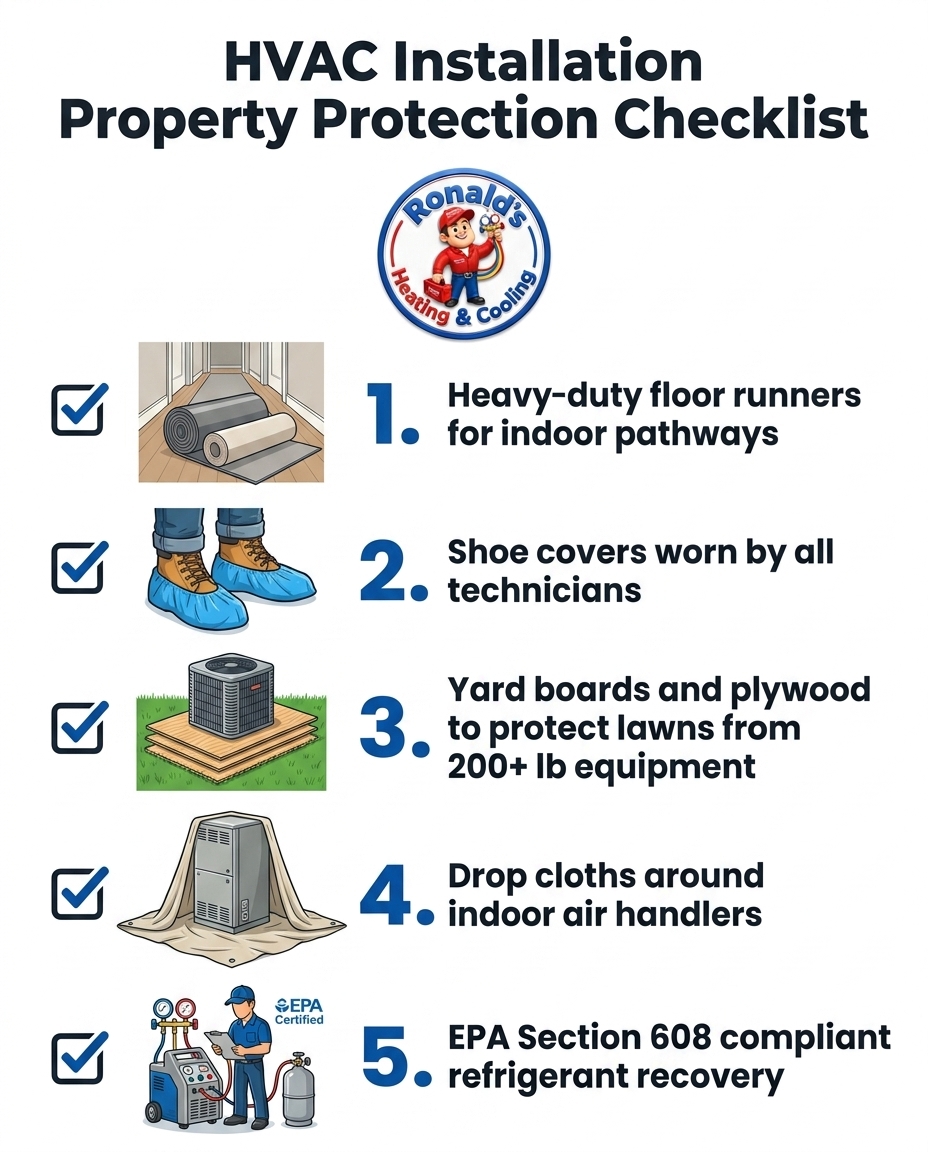
1. Laying down heavy-duty floor runners: We unroll thick, non-slip floor protection from your entryway all the way to the indoor unit location. These runners are puncture-resistant and absorb the impact of heavy tool bags and equipment, ensuring your hardwood, tile, or carpet remains untouched.
2. Mandatory use of shoe covers: Every technician entering your living space is required to wear protective shoe covers. This simple but vital step prevents any residual outdoor dust or moisture from making its way onto your clean floors.
3. Securing drop cloths around the work zone: Whether your air handler is in a closet, a basement, or an attic, we secure thick drop cloths around the immediate perimeter. This catches falling dust, old insulation, and minor debris during the dismantling process.
4. Deploying wall and corner guards: When moving bulky furnaces or air handlers around tight corners, we use temporary padded corner guards. This prevents accidental scuffs or chipped paint if a piece of equipment shifts while being carried.
Securing the Pathway to Your Indoor Unit
Before any heavy lifting begins, the lead technician maps out the safest route through your home. Virginia Beach coastal properties often feature multi-story layouts or narrow, angled hallways that require careful navigation. We assess the width of doorways, the steepness of staircases, and the location of sensitive flooring materials. For highly delicate surfaces, such as newly refinished original hardwoods or white carpeting, we apply specialized, self-adhesive protective films that stay firmly in place despite heavy foot traffic, ensuring the pathway to your indoor unit is completely secured.
Defending Coastal Lawns and Garden Beds from Heavy Machinery
Property protection does not stop at your front door. The outdoor logistics of removing an old condenser and placing a new one require just as much care. A modern, high-efficiency outdoor unit is substantially larger and heavier than models built a decade ago. Moving this 200+ pound piece of machinery across manicured lawns and delicate garden beds requires a deliberate, engineered approach.
Because sandy coastal soil is particularly vulnerable to rutting from heavy equipment, we never roll heavy hand trucks directly over your grass. Instead, we lay down yard boards or thick plywood to create a temporary, stable walkway. This distributes the massive weight of the equipment over a larger surface area, preventing deep footprints, crushed grass, and permanent ruts in the soft soil. Creating this safe walking path is a standard procedure for every AC installation in Chesapeake and the surrounding coastal communities.
We also pay close attention to your landscaping. We use protective tarps draped gently over nearby garden beds, delicate shrubs, and flower arrangements to shield them from dropped screws, falling debris, and the exhaust of power tools. Furthermore, we carefully position our lifting equipment and staging areas to avoid damaging hidden sprinkler heads, landscape lighting, or decorative hardscaping. Your outdoor living space is treated with the same respect as your indoor living room.
Safe Equipment Removal and Environmental Compliance
The Problem: Getting your old, failing climate control system out of your house safely is often riskier to your property than bringing the new one in. Old units are typically filled with standing water, rust, biological growth, and chemical refrigerants. If an old drain pan tips during removal, it can spill acidic water across your ceiling drywall or down your stairs.
The Cause: By late summer (August), a struggling system has usually been running constantly for months. This means condensation lines are often full of water, and drain pans are sitting at maximum capacity. Additionally, the chemical refrigerant inside the copper lines must be handled perfectly to avoid environmental contamination or toxic leaks on your property.
The Solution: We adhere strictly to EPA Section 608 guidelines for proper refrigerant recovery. We use specialized recovery machines to capture every ounce of old refrigerant safely into sealed tanks. Next, we carefully drain all old condensation lines and empty the primary and secondary drain pans before moving the equipment. This prevents sudden water damage to your interior ceilings or floors. If an older unit is too oversized to fit safely through a modern hallway, we dismantle it into smaller, manageable pieces right where it sits. Finally, whether we are performing a cooling upgrade or a heating installation, we haul away all old equipment, scrap metal, and packaging materials directly to our trucks, leaving nothing behind for you to deal with.
Post-Installation Cleanup and Our 'Leave No Trace' Standard
The job is not finished when the new thermostat lights up; it is finished when your home looks exactly as it did before we arrived. We operate on a strict 'Leave No Trace' standard. This meticulous cleanup process is directly tied to our strong professional reputation. In fact, our strict cleanliness protocols are the exact reason we receive high praise in customer reviews.
During a recent spring installation for a homeowner whose upstairs and downstairs systems both failed, our team replaced both units within two days. The defining factor of that major project wasn't just the speed of the work; it was that both systems were completely replaced while leaving the site pristine and tidy. We achieve this consistently through a mandatory final walkthrough.
Before departing, the lead technician ensures all protective materials—from yard boards to floor runners—are carefully rolled up and removed. We sweep, vacuum, and wipe down the immediate work areas around the indoor air handler. Outside, we run magnetic sweepers over the grass and driveway to verify that the outdoor unit area is completely free of dropped screws, sharp wire clippings, and sheet metal shavings. For homes in Virginia Beach coastal properties, where bare feet in the yard are common, this level of detail is a core operating procedure, never an afterthought.
How Homeowners Can Help Secure the Work Environment
While our team handles the heavy lifting and the deployment of all protective materials, homeowners often ask how they can prepare their space for a smoother, safer project. By taking a few simple steps the night before, you can help us secure the work environment and expedite the entire process.
• Clear a three-foot perimeter: Ensure there is at least three feet of clear space around both the indoor air handler (or furnace) and the outdoor condenser. Move stored boxes, holiday decorations, or garden hoses out of the immediate work zone.
• Relocate fragile items: Walk the main pathway from your front door to the equipment location. Remove fragile picture frames from the walls, relocate small hallway tables, and move delicate floor lamps to prevent accidental bumps.
• Secure your pets: Installation day involves open doors, loud noises, and technicians carrying heavy machinery. Secure dogs and cats in a separate, comfortable room to keep them safe and prevent them from escaping.
• Ensure clear driveway access: We need to park our large installation vehicles as close to your home as possible to safely unload heavy equipment. Please move personal vehicles out of the driveway or away from the immediate street curb before we arrive.
Taking these steps helps ensure that the project stays on schedule. For more details on what happens hour-by-hour, you can review our complete one-day HVAC replacement timeline. Especially during the busy late summer (August) season, a little preparation goes a long way in ensuring a flawless installation day.
Frequently Asked Questions
How do I prepare my house for HVAC installation?
The best way to prepare your house is to clear the pathways and work zones before the technicians arrive. Move any small furniture, breakables, and area rugs away from the route between your front door and the indoor unit. Clear a three-foot perimeter around both the indoor and outdoor equipment so the installers have room to maneuver safely. Finally, make sure pets are secured in a separate room away from the noise and open doors.
Will HVAC installers clean up after themselves?
Professional HVAC installers will always clean up after themselves, leaving your home exactly as they found it. Our technicians follow a strict "leave no trace" policy that includes a comprehensive final walkthrough. We sweep and vacuum the indoor work areas, wipe down the new equipment, and use magnetic sweepers outside to pick up any stray screws or metal shavings. Cleanup is considered a mandatory part of the installation process.
Do HVAC installers move furniture?
HVAC installers generally do not move large pieces of personal furniture due to liability and safety concerns. Homeowners are expected to relocate small tables, chairs, or fragile items that block the pathway to the equipment before the crew arrives. If a large, heavy piece of furniture is entirely blocking access to a utility closet, you may need to arrange to have it moved prior to installation day to ensure the team can work safely.
What happens on HVAC installation day?
On installation day, the crew will arrive, review the job with you, and immediately begin laying down protective floor coverings and drop cloths. They will then safely recover the old refrigerant, dismantle and remove your old equipment, and prepare the site for the new units. After the new system is installed, wired, and connected to your ductwork, they will run a complete series of performance tests before cleaning up the site and showing you how to operate your new thermostat.
How do you protect hardwood floors during an installation?
We protect hardwood floors by laying down continuous, heavy-duty floor runners from the entry door straight to the indoor work area. These thick, non-slip mats absorb the impact of heavy tool bags and prevent scratches from equipment. Additionally, all technicians entering your home are required to wear protective shoe covers, ensuring that abrasive dirt and mud are never tracked onto your delicate flooring.
Will replacing my outdoor AC unit damage my lawn?
Replacing your outdoor AC unit will not damage your lawn if proper logistical precautions are taken. We lay down thick yard boards or heavy plywood over your grass to create a stable walking path. This distributes the massive weight of the 200-pound condenser and the heavy hand trucks, preventing deep ruts, crushed grass, and compacted soil, even if the ground is slightly wet.
Providing Peace of Mind Through Superior Logistics
Understanding exactly how we protect your home and landscaping during a major HVAC installation removes the stress from upgrading your climate control system. By treating property defense as a mandatory phase of the job, we ensure your walls, floors, and lawns remain pristine. If you are ready for a professional replacement experience that respects your home from start to finish, reach out to our team today to schedule your consultation.
