





The Hidden Cost of Upgrading: Why a New Unit Isn't Always Enough
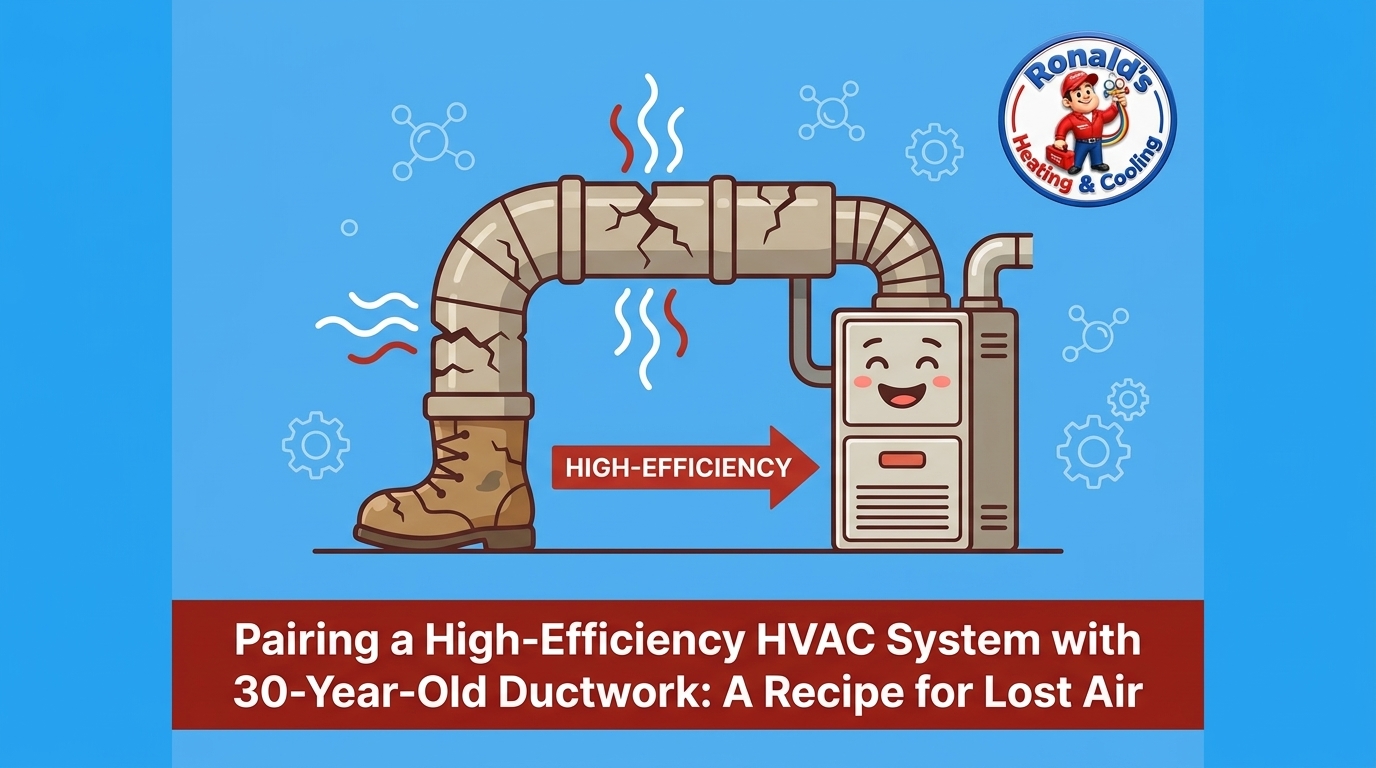
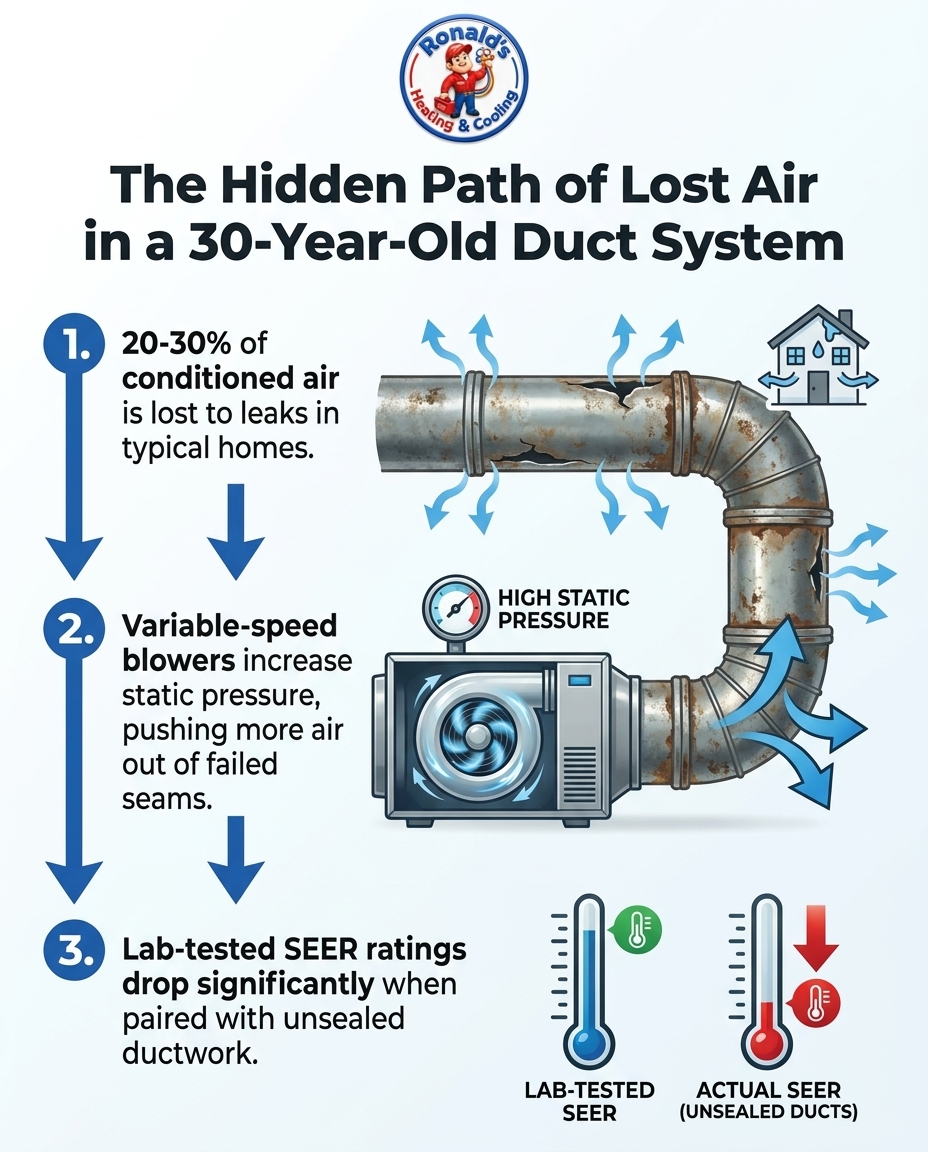
According to energy efficiency data, typical homes lose 20 to 30 percent of the air moving through their systems due to poorly connected or leaky ducts. This staggering statistic reveals a hard truth for homeowners: pairing a high-efficiency HVAC system with 30-year-old ductwork: a recipe for lost air and wasted energy. As you prepare for the September pre-heating season transition, upgrading your mechanical equipment while ignoring the distribution system is a common misstep. Treating the equipment upgrade and the air distribution system as entirely separate issues forces your new unit to work harder than necessary, effectively throwing your investment out the window. Before finalizing an equipment swap, you must evaluate the health of your ductwork to ensure your new system can actually deliver the comfort you expect.
If you are exploring modern air conditioning systems, establishing a solid foundation for airflow is just as important as selecting the right mechanical unit.
The Two-Part Comfort Equation: Equipment vs. Distribution
To understand why a new unit is only half the battle, you have to look at your home's climate control as a two-part equation. On one side, you have the mechanical unit—the engine that generates heated or cooled air. On the other side, you have the ductwork—the delivery highway that transports that air into your living spaces. No matter how powerful or efficient the engine is, a highway full of potholes and missing bridges will prevent the delivery from ever reaching its destination.
The biggest challenge homeowners face is the lifespan mismatch between these two components. Mechanical HVAC units are typically replaced every 10 to 15 years. Because of this, it is incredibly common to find 30-year-old ductwork that has outlasted multiple mechanical systems. While the metal boxes outside and in your utility closet get swapped out, the hidden network of tubes in your home remains untouched, quietly degrading year after year. If you are planning an HVAC installation, evaluating this aging delivery highway is non-negotiable.
Why Age Matters for Air Ducts
Air ducts do not have moving parts, which leads many people to believe they last forever. However, the materials used in older duct routing degrade significantly over three decades. This is especially true for Virginia Beach homes with older crawlspace or attic duct routing, where extreme temperature fluctuations accelerate wear and tear.
• Deterioration of old mastic and tape: The adhesives and sealants used 30 years ago become brittle and flake away over time, leaving seams completely exposed.
• Foundation shifting: As a house settles over the decades, the slight movements pull rigid duct joints apart, creating hidden gaps.
• Accumulated minor damages: Decades of tradespeople working in the attic, minor pest intrusions, or accidental bumps slowly crush flexible segments and compromise the structural integrity of the network.
• HVAC Mechanical Unit — Average Lifespan: 10 to 15 Years — Primary Function: Generates heated or cooled air — Vulnerability Over Time: Mechanical wear, motor failure, electrical issues
• Ductwork Network — Average Lifespan: 20 to 25 Years — Primary Function: Distributes air throughout the home — Vulnerability Over Time: Failed seams, degraded tape, crushed flexible sections
The Physics of Variable-Speed Blowers and Static Pressure
Modern high-efficiency systems operate very differently from the basic units installed a few decades ago. One of the most significant advancements is the variable-speed blower motor. Instead of just turning on at full blast and shutting off when the thermostat is satisfied, a high-efficiency variable-speed motor adjusts its airflow continuously. It ramps up and down to maintain precise comfort and humidity levels. However, this advanced technology relies heavily on a properly sealed environment to function correctly.
To understand why this matters, you need to understand static pressure. In layman's terms, static pressure is the resistance the blower motor must push against to distribute air throughout your home. Think of it like blowing air through a straw. If the straw is clear and intact, the air flows smoothly. If the straw is pinched, you have to blow much harder to get the same amount of air through.
When a powerful new variable-speed blower encounters the resistance of older, potentially undersized, or heavily compromised ductwork, the system reacts by increasing the pressure to force the air through. This increased pressure becomes a massive liability if your ducts are not sealed.
How Static Pressure Exposes Hidden Leaks
The relationship between modern blowers and old ductwork often creates unintended consequences that catch homeowners off guard during the September pre-heating season transition.
• The balloon effect: When static pressure increases inside a sealed network, the air reaches the vents efficiently. But if there are failed seams, the increased pressure acts like a balloon being squeezed—the air violently escapes through the path of least resistance, which is usually the leaks.
• Masked problems: Older, single-stage motors often lacked the power to expose these leaks as severely. They simply dumped air into the system and shut off, meaning minor leaks stayed minor.
• Direct correlation: The more powerful and efficient the modern blower is, the more conditioned air it will actively force out of the existing failed seams in an aging duct system.
Where Does the Conditioned Air Go? The Attic and Crawlspace Drain
When powerful new blowers force air out of failed seams, that expensive, conditioned air does not just disappear. It gets pumped directly into unconditioned spaces instead of your living room. For Virginia Beach homes with older crawlspace or attic duct routing, this creates a massive drain on both comfort and energy resources.
During the summer, you end up air conditioning your 130-degree attic. During the winter, you are paying to heat a freezing crawlspace. This constant loss forces your brand-new system to run longer cycles just to satisfy the thermostat inside the house. A typical pattern we see often during winter service calls is a system that suddenly stops providing adequate heat, leading homeowners to assume the unit itself is broken. In one recent case, a homeowner had been told by another provider that their equipment was simply outdated and completely unfixable. However, a comprehensive diagnostic check in the attic revealed something entirely different: a major duct segment had become completely unhooked. By troubleshooting the actual distribution network, locating the missing connection part, and properly reinstalling it, the existing system was restored to full working order. This highlights exactly why thorough diagnostics matter before condemning a unit.
Furthermore, unsealed ductwork does not just leak air out; it also pulls unconditioned air in. If you are considering duct cleaning, it is vital to have the system inspected for these return leaks first, as cleaning a severely broken duct will not solve the underlying air quality issues.
The Impact of Return Side Leaks
When the return side of your ductwork has failed seams, the consequences go far beyond simple energy loss. The system begins actively fighting against the local climate.
• Pulling in humidity: Virginia Beach coastal humidity is relentless. When a return leak in a crawlspace pulls moist, humid air into the system, your new air conditioner has to work overtime just to dehumidify that raw air before it can even begin cooling the house.
• Straining the filtration: Pulling dusty, dirty air from an attic or crawlspace directly into the home places massive strain on the new system's air filter and blower motor, leading to premature wear.
• Compromising indoor air quality: Drawing air from unconditioned spaces introduces allergens, mold spores, and insulation fiberglass directly into the air you breathe inside your living room.
SEER Ratings and The Ductwork Penalty
When shopping for a new HVAC system, the SEER (Seasonal Energy Efficiency Ratio) rating is often the primary focus. Homeowners naturally assume that buying a 18-SEER unit guarantees a massive reduction in energy consumption compared to their old 10-SEER unit. However, there is a fundamental disconnect between laboratory ratings and real-world performance.
SEER ratings are calculated under perfect, heavily controlled laboratory conditions. In the lab, the ductwork is perfectly sealed, the static pressure is optimized, and there is zero air loss. When that same high-efficiency unit is installed in a real home and connected to a compromised distribution network, it suffers from what the industry calls the "Ductwork Penalty."
If your system is losing 20 to 30 percent of its conditioned air through failed seams, that pristine 18-SEER rating effectively downgrades. The new unit cannot overcome compromised ductwork, no matter how advanced the internal technology is. The blower motor has to run longer and consume more electricity to make up for the air being lost into the attic, completely negating the efficiency gains you paid for. Understanding what to expect during an HVAC replacement means understanding that the box outside is only part of the equation.
Why the Box Swap Fails
Treating a home comfort upgrade as a simple "box swap" is a fundamental error that leads to buyer's remorse, especially during the September pre-heating season transition.
• The efficiency misconception: Upgrading the mechanical unit does not automatically guarantee lower energy bills if the delivery system is broken.
• Overworked components: Overworked variable-speed blower motors consume significantly more electricity when fighting against severe static pressure and air loss.
• The thermal envelope: True efficiency requires treating the home as a complete thermal envelope, where the mechanical unit and the sealed distribution network work in perfect harmony.
Identifying Failing 30-Year-Old Ductwork Before You Upgrade
Before you commit to a major mechanical upgrade, it is vital to assess the health of your existing distribution network. While some ductwork issues require professional tools to diagnose, there are several warning signs homeowners can identify on their own. For Virginia Beach homes with older crawlspace or attic duct routing, a quick visual inspection can reveal a lot about the state of your system.
If you poke your head into the attic or safely view the crawlspace, look for obvious visual signs of duct failure. Peeling foil tape, disconnected metal joints, or flexible ducts that look crushed or torn are immediate red flags. Inside the home, pay attention to comfort signs. If you have specific rooms that are always too hot in the summer or too cold in the winter, excessive dust accumulating on furniture days after cleaning, or whistling noises coming from the vents when the system runs, your network is likely compromised.
The most effective way to quantify this problem is to request a professional evaluation, such as duct air leakage testing, during the quoting process for your new system.
The Value of a Duct Pressure Test
A simple visual inspection can spot massive failures, but a professional duct pressure test provides hard data on exactly how much air your system is losing.
1. Sealing the network: A technician temporarily seals all the supply and return registers inside the home to isolate the ductwork.
2. Pressurizing the system: A specialized fan is attached to the main return, pressurizing the entire duct network.
3. Measuring the loss: The equipment measures exactly how much air is escaping through hidden leaks, providing a precise leakage percentage.
4. Making an informed decision: Using this data, you can make an educated choice on whether the existing ducts can be professionally sealed with modern mastic, or if the 30-year-old network requires full replacement alongside the new mechanical unit.
Frequently Asked Questions About HVAC Efficiency and Ductwork
Can you put a new HVAC unit on old ductwork?
Yes, you can physically connect a new HVAC unit to old ductwork, but it is rarely recommended without a thorough inspection first. If the 30-year-old ducts have failed seams, peeling tape, or crushed sections, the new high-efficiency unit will force conditioned air into your attic or crawlspace. Ensuring the existing network is properly sealed or replaced is the only way to guarantee the new system operates efficiently.
How much efficiency is lost through old ductwork?
In typical homes, roughly 20 to 30 percent of the conditioned air moving through the duct system is lost due to leaks, holes, and poorly connected joints. This massive loss forces your HVAC system to run longer cycles to reach the desired temperature indoors. Over time, this drastically increases energy consumption and puts unnecessary wear and tear on the blower motor.
Do I need to replace ductwork to get a higher SEER rating?
To achieve the actual SEER rating advertised on the box, your ductwork must be airtight and properly sized. Lab-tested SEER ratings are calculated under perfect conditions with zero air loss. If you connect an 18-SEER unit to a leaky, aging distribution network, the resulting "ductwork penalty" will downgrade your real-world efficiency, making it perform like a much older, less efficient model.
What are the signs that 30-year-old ductwork needs replacing?
The most common visual signs include peeling tape at the joints, completely disconnected metal segments, and crushed or torn flexible ducting in unconditioned spaces. Inside the home, you might notice persistent hot or cold spots in specific rooms, excessive dust buildup, or strange whistling noises when the blower turns on. These symptoms indicate that the network is failing to deliver air properly.
Does sealing old ductwork improve a new HVAC system's airflow?
Absolutely. Sealing old ductwork ensures that the air produced by the mechanical unit actually reaches your living spaces instead of escaping into the attic or crawlspace. By eliminating leaks, you reduce the static pressure strain on the variable-speed blower motor, which significantly improves both the volume and consistency of airflow coming from your vents.
Securing Your Home's Efficiency for the Fall Transition
As the September pre-heating season transition approaches, taking a comprehensive approach to your home comfort is the best way to protect your investment. True efficiency requires both a modern, capable HVAC unit and an airtight distribution system that can deliver that conditioned air without restriction. Ignoring the delivery highway while upgrading the engine is a surefire way to overwork your new equipment and inflate your energy usage.
Ultimately, pairing a high-efficiency HVAC system with 30-year-old ductwork: a recipe for lost air that no homeowner should have to accept. Before the colder weather fully sets in, take the time to authorize a thorough inspection and pressure test of your existing network. By deciding to seal or replace compromised ducts alongside your new equipment installation, you ensure that every ounce of conditioned air you pay for actually makes it into your living room.
