





Caught Between Summer Heat and Autumn Chills
Your air conditioner has been running nonstop to battle the heavy coastal humidity, but the house still feels warm, leaving you wondering why September is the ideal time for a dual-season HVAC checkup. The short answer is that Virginia Beach air conditioners have just endured months of grueling work and are practically exhausted. Meanwhile, your heating system has been sitting completely dormant, untested, and ignored before the inevitable crisp fall temperature drops arrive. You are now at a critical decision point: wait for the first freezing night to discover your heater is broken, or take proactive steps to secure your comfort now.
To protect your equipment year-round, exploring a comprehensive HVAC maintenance plan is the smartest first step.
Homeowners facing the September coastal transition often overlook the mechanical strain placed on their entire climate control system. While the weather outside begins to offer a brief reprieve, the internal components of your HVAC unit are telling a different story. The cooling cycle has pulled gallons of moisture out of your indoor air, stressing the compressor and blower motor. Simultaneously, the furnace has gathered dust, its moving parts stiffening after months of inactivity. Addressing both the summer wear-and-tear and the upcoming winter prep simultaneously is the smartest strategy for coastal homeowners. By evaluating the entire system holistically, you prevent the compounding damage that occurs when stressed equipment is simply shut off and forgotten until the next extreme weather event.
The True Cost of Waiting
The reactive approach: Waiting for a breakdown is the most expensive way to manage a home. When you delay service until your system fails, you are not just paying for a repair; you are paying for emergency dispatch, expedited parts shipping, and the discomfort of a freezing or sweltering home. A dual-season checkup eliminates this gamble entirely.
The Hidden Toll of Coastal Summers on Your Air Conditioner
Coastal environments accelerate wear on outdoor HVAC components in ways that inland systems rarely experience. The combination of salt air and high humidity found across Virginia Beach coastal and inland properties creates the perfect storm for rapid degradation. When your air conditioner runs heavily through July and August, it draws massive volumes of this damp, salt-laden air across its outdoor condenser coils.
The compounding problem: As the season progresses, these coils become caked with dirt, pollen, and microscopic salt deposits. Dirty condenser coils force the system to work much harder to release heat. This restricted airflow can increase energy consumption by up to 30% if left uncleaned, driving up your utility bills even as the weather cools down. Shutting down an unmaintained AC for the winter without addressing this buildup allows galvanic corrosion and grime to set in permanently.
The proactive solution: A proper end-of-summer AC tune-up clears out the debris and secures the unit against off-season degradation. Technicians wash away the corrosive salt deposits, straighten bent coil fins, and ensure the refrigerant lines are intact before the system is powered down for the season.
Why You Shouldn't Just 'Turn It Off'
Simply flipping the thermostat from "cool" to "heat" is a recipe for disaster. Residual moisture left sitting in the air handler's drain pan can quickly lead to mold and mildew growth in the dark, enclosed space. Furthermore, failing to address minor summer wear—such as a slightly frayed blower belt or a failing capacitor—now guarantees major repairs next spring when you demand immediate cooling again.
The Risks of Firing Up a Dormant Furnace
Turning on an untested furnace after it has been sitting unused carries significant risks, ranging from minor annoyances to severe safety hazards. Throughout the spring and summer, furnaces and heat pumps collect dust, and moving parts can seize up after months of inactivity. When the September coastal transition brings that first true chill, demanding instant heat from a dormant system is a shock to its mechanical components.
We frequently observe the consequences of ignoring dormant systems. A typical pattern we see involves sudden failures right when the cold hits. For example, one local homeowner recently experienced an unexpected heater failure just as temperatures dropped. Because they had skipped their fall maintenance, the system locked up completely. A technician had to be dispatched immediately, arriving within an hour to diagnose the seized components, source the necessary parts, and complete the repair before the house grew dangerously cold.
To understand the risks, consider what happens during an untested startup sequence:
1. Dust combustion: Accumulated dust on the heat exchanger burns off, creating terrible odors and potentially masking the smell of actual electrical issues.
2. Ignition failure: Flame sensors oxidize over the summer. When the thermostat calls for heat, the dirty sensor fails to detect the flame, causing the system to shut down repeatedly.
3. Safety switch lockouts: Seized blower motors or blocked flues trigger internal safety limits, leaving you without heat when you need it most.
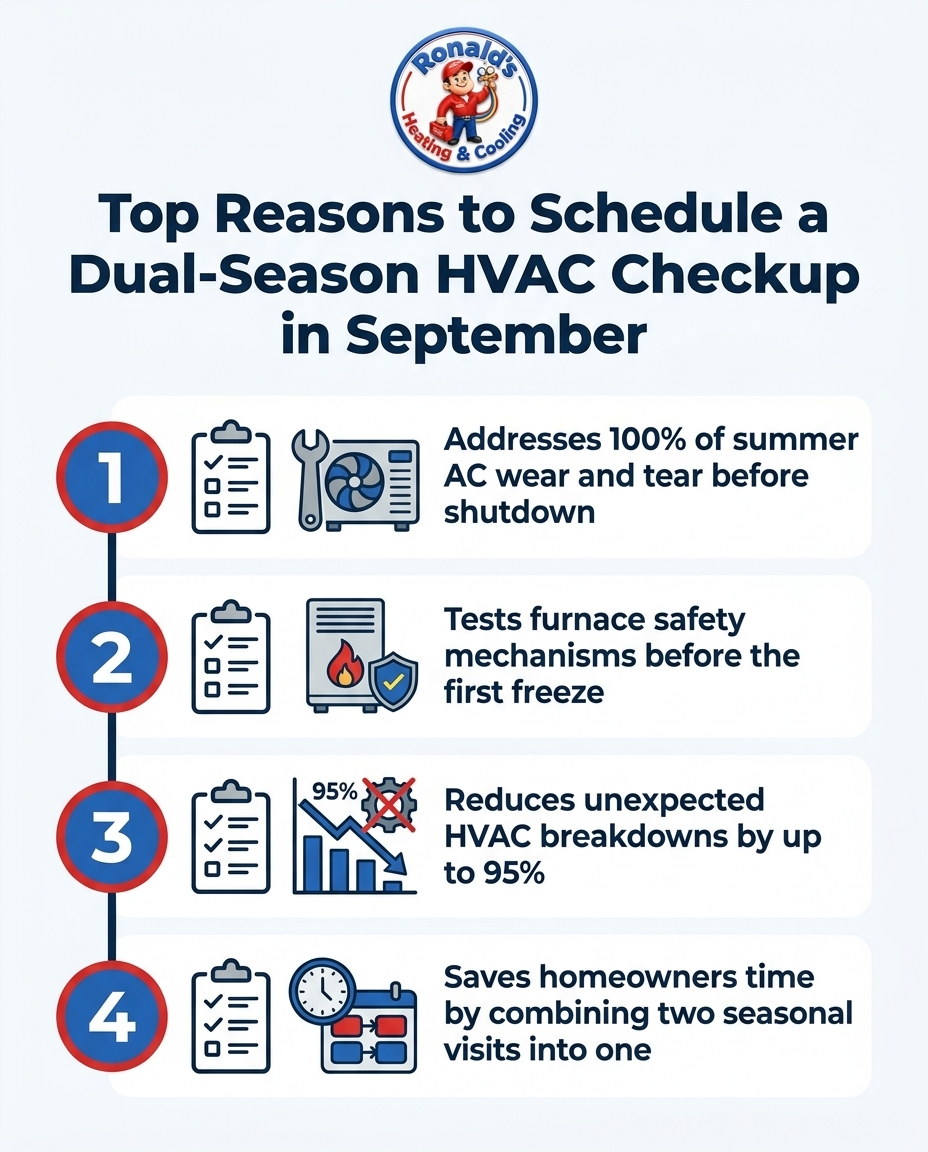
Carbon monoxide safety checks are a non-negotiable part of prepping gas furnaces for winter use. A cracked heat exchanger can leak deadly, odorless gas into your living space. Preventative maintenance is proven to reduce unexpected breakdowns by up to 95%, ensuring these safety mechanisms are fully operational before the first freeze.
What Makes a Dual-Season Checkup Different?
Most companies sell separate AC and heating tune-ups, requiring two distinct appointments, two service fees, and two disruptions to your busy schedule. A dual-season checkup evaluates the entire HVAC system holistically in a single visit. Technicians address the cooling shutdown protocols while simultaneously running the heating startup sequence, ensuring the transition is seamless.
This holistic approach saves homeowners time and ensures nothing is missed during the rapid seasonal transition. Especially across Virginia Beach coastal and inland properties, where a hot afternoon can quickly turn into a freezing night, having both systems verified gives you total control over your indoor climate.
• Time Commitment — Separate Seasonal Tune-Ups: Requires two separate half-day appointments — Dual-Season Checkup: Completed in a single, comprehensive visit
• System Evaluation — Separate Seasonal Tune-Ups: Looks at heating or cooling in isolation — Dual-Season Checkup: Evaluates shared components (blower, ductwork) holistically
• Cost Efficiency — Separate Seasonal Tune-Ups: Incurs two separate dispatch and service fees — Dual-Season Checkup: Consolidates labor into one efficient appointment
• Climate Readiness — Separate Seasonal Tune-Ups: Leaves one system vulnerable during volatile shoulder seasons — Dual-Season Checkup: Prepares the home for both sudden heat waves and cold snaps
Working with Ronald's Heating & Cooling means benefiting from a comprehensive dual-season maintenance approach. This time-saving convenience protects your equipment against sudden temperature drops without forcing you to manage multiple service calendars.
Why September is the Strategic Sweet Spot for Maintenance: Why September is the Ideal Time for a Dual-Season HVAC Checkup
September marks a rapid transition in our region, where average highs drop from the mid-80s to crisp autumn lows. This specific weather shift creates a brief window where neither the AC nor the furnace is under peak operational strain. Testing a furnace in the dead of summer is difficult, and servicing an AC in freezing temperatures is impossible due to refrigerant pressure changes. The mild temperatures of the September coastal transition make it the perfect time to test both systems without making your house uncomfortably hot or cold.
Scheduling now avoids the massive winter rush that occurs the morning after the first freezing night. Every year, service boards light up with emergency calls from homeowners who assumed their furnace would turn on flawlessly. Securing your HVAC maintenance in Virginia Beach during September ensures your system is ready before emergency repair wait times skyrocket.
The danger of extreme weather: A severe winter storm can push an untested system past its breaking point. In one notable instance, a local customer's furnace went out entirely during one of our region's worst winter storms. Because the system had not been inspected, a minor underlying issue cascaded into a total failure, requiring an emergency crew to replace the furnace immediately to restore safe living conditions. Proactive scheduling prevents these high-stress scenarios.
Preventing Pricey Mid-Winter Breakdowns
Catching minor issues in the fall is the key to preventing catastrophic failures in December. The components inside your HVAC system are highly interconnected; a single failing part forces the rest of the system to overcompensate, accelerating wear across the board.
During a comprehensive dual-season visit, technicians look for the specific red flags that lead to expensive furnace repair calls later in the year. Catching frayed belts, low refrigerant, or failing ignitors now keeps your system running smoothly when the weather turns harsh.
• Cracked heat exchangers: Identifying hairline cracks prevents carbon monoxide leaks and total system shutdowns.
• Worn contactors and capacitors: Replacing these affordable electrical components prevents the blower motor or compressor from burning out.
• Imbalanced blower wheels: Cleaning the blower assembly stops aggressive vibrations that can tear the system apart over a long winter.
• Clogged condensate drains: Clearing summer algae buildup prevents water damage and freezing blockages in the winter.
A well-maintained system operates efficiently, keeping winter utility bills manageable. Proactive care extends the overall lifespan of both the cooling and heating units across Virginia Beach coastal and inland properties. Ultimately, investing in a single comprehensive visit eliminates the stress of unpredictable winter heating emergencies.
Managing Indoor Air Quality During the Fall Transition
As the September coastal transition takes hold and temperatures drop, homeowners naturally begin to close their windows and seal up their homes. While this keeps the cold out, it also traps airborne pollutants inside. Your HVAC system is the lungs of your home, and its condition directly impacts the air your family breathes.
The filter factor: Heavy summer usage clogs air filters with dust, pollen, and pet dander. If these filters are not changed before the heating season begins, the furnace blower has to fight through a wall of debris just to circulate air. As homes are sealed up for the cooler months, these trapped airborne pollutants degrade indoor air quality, triggering allergies and respiratory irritation.
A dual-season checkup includes replacing these exhausted filters and checking the ductwork for mold or debris that may have accumulated during the humid summer. Furthermore, proper humidity control during the fall transition protects hardwood floors from shrinking and keeps the home comfortable. Taking steps to optimize your home humidity control in Virginia ensures that the air circulating through your freshly tuned furnace is healthy, clean, and perfectly balanced.
Frequently Asked Questions
Why do I need a dual-season HVAC checkup?
A dual-season checkup ensures both your heating and cooling systems are evaluated in a single visit, saving you time and money. It addresses the wear and tear your AC sustained over the summer while simultaneously prepping your dormant furnace for winter. This holistic approach guarantees your entire climate control system is ready for sudden weather shifts.
When is the best time for fall HVAC maintenance?
September is widely considered the best time for fall maintenance because the mild weather creates a brief window of low operational strain. Temperatures are moderate enough to test both the air conditioning and the heating cycles accurately. Scheduling during this time also helps you beat the massive rush of emergency calls that occur after the first freeze.
What happens during a fall HVAC tune-up in coastal areas?
In coastal areas, technicians focus heavily on removing corrosive salt and humidity buildup from the outdoor condenser unit before shutting it down. They also inspect the indoor air handler for residual moisture to prevent mold growth. Finally, they test all furnace safety mechanisms, including carbon monoxide detectors and flame sensors, to ensure safe winter operation.
Do I really need AC and furnace maintenance every year?
Yes, annual maintenance is critical for maintaining equipment efficiency and preserving manufacturer warranties. Regular upkeep reduces unexpected breakdowns by up to 95% and prevents minor wear from turning into expensive component failures. Skipping maintenance often leads to higher utility bills as the system struggles to push air through dirty coils and filters.
Is it better to get HVAC maintenance in fall or winter?
It is always better to schedule maintenance in the early fall before you actually need to rely on your heating system. Waiting until winter means you risk turning on a damaged or unsafe furnace when temperatures drop. Fall maintenance acts as a preventative shield, whereas winter service calls are often reactive emergency repairs.
Can a dual-season checkup help lower my winter heating bills?
Absolutely. A clean, well-lubricated furnace requires significantly less energy to generate and distribute heat throughout your home. By ensuring burners are clean, airflow is unrestricted, and electrical components are functioning optimally, your system runs shorter cycles, which directly translates to lower monthly utility costs.
Securing Your Comfort Before the Cold Hits
Understanding why September is the ideal time for a dual-season HVAC checkup gives you a distinct advantage over unpredictable coastal weather. By addressing summer AC exhaustion and preparing your dormant furnace in one efficient visit, you prevent sudden breakdowns and secure reliable comfort. Take action now to ensure your home remains a safe, warm haven all winter long.
