





Is Waiting for Normal Business Hours Worth the Risk to Your AC?
At Ronald's Heating & Cooling, we frequently hear from customers who notice their air conditioner is running continuously on a Saturday afternoon, but the house still feels warm and sticky, forcing them to weigh the real cost of delaying an emergency AC repair in July. It is a common dilemma we see homeowners facing during peak summer heat: do you call our team for immediate help and pay an after-hours dispatch fee, or do you turn on some fans and wait until Monday morning?
In our experience serving the local community, the short answer is that waiting is rarely a safe financial bet. Delaying an emergency AC repair in July forces a compromised system to work continuously against high humidity. We routinely see this sustained strain escalate a minor issue, like a failing capacitor, into a complete compressor burnout, turning a simple fix into a major system replacement.
If you are experiencing signs of system failure, securing professional air conditioning services immediately is the safest way to protect your equipment. Understanding the mechanical reality of how your system operates under extreme stress empowers you to make an informed choice. An air conditioner does not heal itself. When parts begin to degrade, the system compensates by drawing more electrical current and running longer cycles. During the peak coastal humidity of July, that lack of recovery time pushes internal temperatures to dangerous levels, turning a small, localized component failure into a cascading mechanical disaster.
How Coastal Humidity Accelerates AC Wear and Tear
To understand why waiting is so destructive, you have to look at what your air conditioner is actually fighting against. In our years of restoring comfort across the region, we've found that most homeowners assume an AC unit only lowers the temperature of the air. In reality, your system handles two distinct types of heat: sensible heat and latent heat.
Sensible heat is the temperature you read on a thermometer. Latent heat is the moisture suspended in the air—the humidity. Before your air conditioner can effectively lower the sensible heat in your home, it must first extract the latent heat. This requires the indoor evaporator coil to drop below the dew point, condensing the moisture out of the air so it can drain away. Only after a significant portion of this moisture is removed will the actual temperature in the room begin to drop.
This process is exactly why coastal climates are so brutal on HVAC equipment. With Virginia Beach's average summer humidity sitting between 70% and 80%, the latent heat load on your system is massive compared to inland climates. The unit must run for extended periods just to dehumidify the space. If your system is struggling with a failing part or low refrigerant, it will never catch up to the thermostat's demand. It will run continuously, denying the compressor the vital cool-down periods it needs between cycles. Scheduling prompt AC repair in Virginia Beach ensures your system can handle this heavy moisture load without destroying itself.
The Burden of Latent Heat
What exactly is latent heat?
Latent heat is the thermal energy hidden in airborne moisture. It makes the air feel thick and heavy. Because water holds a tremendous amount of heat energy, removing it requires your air conditioner to work significantly harder than it would in a dry climate.
Why does high humidity force longer run cycles?
Your thermostat only measures sensible heat (temperature). If the air is highly humid, the AC expends most of its cooling capacity condensing that moisture. The thermostat will not register a drop in temperature until the humidity is managed, forcing the system to run non-stop. If a component is already failing, this continuous operation accelerates the breakdown rapidly.
When a Minor Component Failure Threatens the Whole System
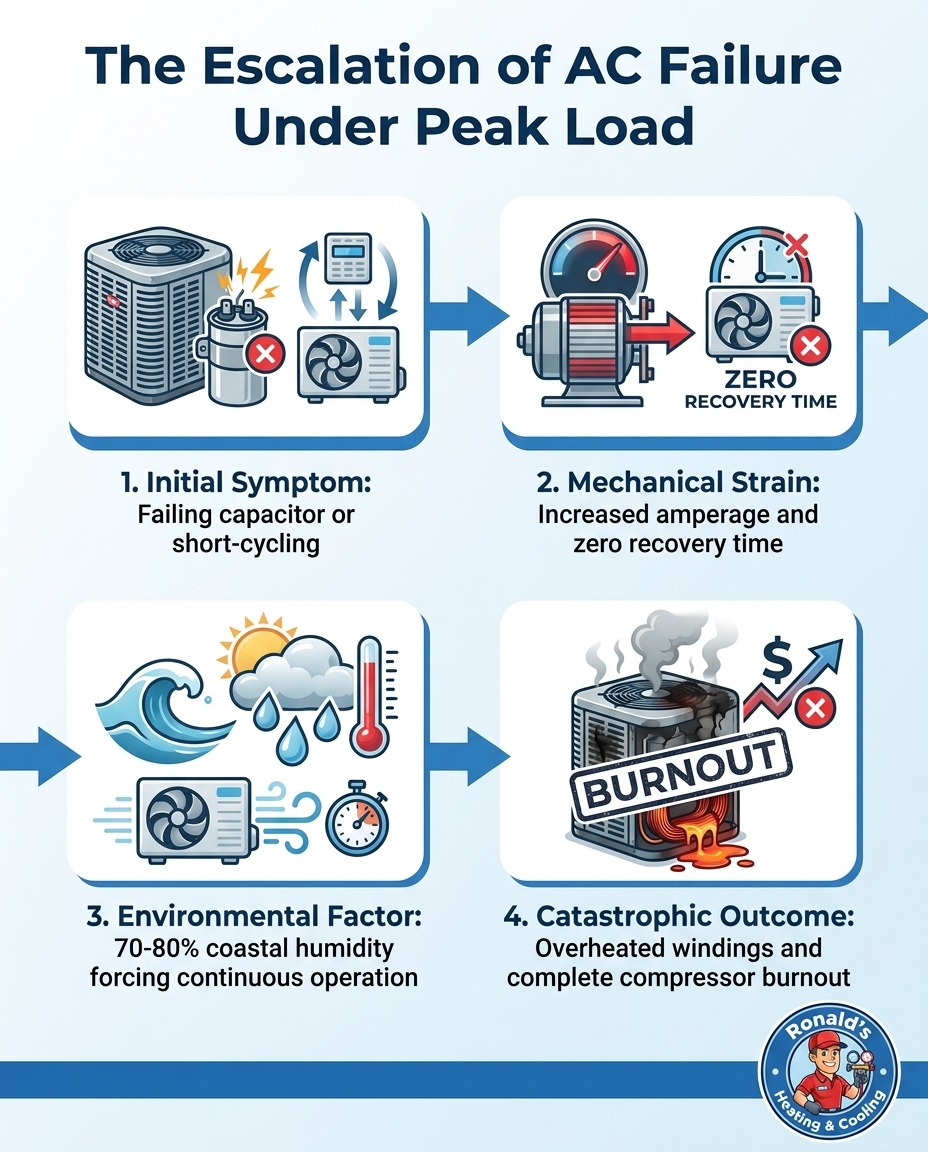
The vast majority of catastrophic air conditioning failures we respond to do not happen instantly. They begin as minor, easily fixable component issues that are ignored or delayed. When homeowners try to push a struggling system through a hot weekend, the mechanical escalation happens quickly.
Consider the process of how a small electrical issue turns into a severe hazard:
1. The initial symptom: A dual-run capacitor begins to lose its ability to hold an electrical charge. The capacitor's job is to provide a massive jolt of electricity to start the compressor motor.
2. The mechanical strain: Because the capacitor is weak, the compressor struggles to start. It pulls a much higher amperage from your electrical panel to force the motor to turn over. This is often what makes your AC circuit breaker trip, as the safety mechanism detects the dangerous electrical draw.
3. The thermal overload: If the breaker is reset and the system is forced to keep running, that higher amperage generates intense heat. The electrical windings inside the compressor begin to overheat, degrading their protective insulation.
4. The final breakdown: The insulation melts away, the windings short out, and the compressor dies completely.
Catching these minor component failures early is critical. One Virginia Beach homeowner learned the value of a proper diagnosis during a brutal July heatwave when they initially assumed their entire system required replacement due to unhooked and missing parts. A technician from our team found the missing component, ordered it, and installed it, restoring the system perfectly and saving the homeowner from an unnecessary replacement. The cost difference between a minor component fix and a full compressor replacement is staggering, making early intervention the smartest financial choice you can make.
The Domino Effect Leading to Complete Compressor Burnout
The compressor is the heart of your air conditioning system. It is responsible for pumping refrigerant between the indoor and outdoor coils, facilitating the transfer of heat. Because it is a heavy-duty mechanical motor, it relies on the cool refrigerant returning from the house to keep its internal components from overheating. When a system is compromised, that cooling process is interrupted.
If you force a struggling system to run during a July heatwave, the thermal stress placed on the compressor is immense. Operating continuously without cycling off means the motor is generating heat faster than it can dissipate it. Once a compressor fails, the damage is usually so severe that repairing it is not viable. A dead compressor often necessitates replacing the entire outdoor unit due to the extensive labor and contamination risks involved. One local customer experienced the cascading effect of system failure during a recent peak-summer heatwave when their upstairs AC system stopped working and required an AC replacement, followed shortly by the downstairs system failing as well under the shared strain of the house's heat load.
Why Short-Cycling is a Red Flag
What does short-cycling sound like?
Short-cycling occurs when your air conditioner turns on, runs for only a few minutes, and abruptly shuts off before the house is cooled. You will hear the loud click of the contactor and the hum of the outdoor unit starting up, only for it to fall silent almost immediately. This cycle repeats continuously.
How does it damage the system?
An air conditioner draws the most power and experiences the most wear during the startup phase. Short-cycling forces the compressor to endure this violent startup sequence dozens of times an hour. This prevents the system from removing humidity, spikes your energy consumption dramatically, and rapidly overheats the compressor motor until it fails completely.
Weighing the Dispatch Fee Against Catastrophic System Failure
It is completely understandable to hesitate before paying a premium for weekend or after-hours dispatch. No homeowner wants to incur unexpected expenses. However, evaluating the true cost requires looking at the massive relative expense of a full compressor or system replacement compared to a simple service call.
When you delay a repair, you are not just saving the initial dispatch fee. You are actively risking the most expensive components in your HVAC system. The table below outlines the conceptual differences we discuss with homeowners between calling immediately and waiting until regular business hours.
• Initial Output — Immediate Emergency Dispatch: Standard emergency dispatch fee. — Delaying Until Regular Hours: No immediate fee, but high risk of escalation.
• Mechanical Impact — Immediate Emergency Dispatch: System is shut down and diagnosed before catastrophic damage occurs. — Delaying Until Regular Hours: System runs continuously under peak load, overheating the compressor.
• Energy Consumption — Immediate Emergency Dispatch: System efficiency is restored quickly, keeping utility bills stable. — Delaying Until Regular Hours: A struggling unit consumes massive amounts of electricity, spiking the monthly bill.
• Long-Term Result — Immediate Emergency Dispatch: Preserves the lifespan of the equipment by addressing the root cause. — Delaying Until Regular Hours: High probability of needing a total system replacement due to compressor burnout.
The cost difference between replacing a simple capacitor today and replacing a burned-out compressor on Monday is severe. The emergency fee is not a penalty; it is an investment in preserving the lifespan of your equipment.
Why Rapid Mechanical Intervention Saves Your Equipment
Emergency technicians do not just show up to restore your comfort; our primary goal is to diagnose the root cause and stop the cycle of overheating immediately. When a professional from our team arrives, they assess the system's vital signs—checking amperage draws, testing electrical windings, and measuring refrigerant pressures—before the compressor reaches the point of no return.
Ronald's Heating & Cooling's rapid response and proven expertise in handling critical summer breakdowns means we intervene mechanically before catastrophic failure occurs. Our technicians carry the testing equipment required to identify exactly which component is failing under the heavy July load. Securing emergency AC service empowers you to halt the damage. Calling early gives our technicians a chance to save the unit, replace the struggling part, and restore proper airflow and refrigerant circulation before the motor burns out entirely.
Frequently Asked Questions About Summer AC Emergencies
What happens if I delay AC repair?
In our experience, delaying an AC repair forces a compromised system to work harder, often escalating a minor issue into a catastrophic breakdown. When a component like a capacitor or fan motor begins to fail, the compressor must pull more electrical current to compensate. This excess current generates extreme heat inside the unit. If left unchecked during hot weather, this thermal stress will melt the electrical insulation and destroy the compressor, turning a simple part replacement into a massive financial burden.
Can I run my AC if it needs repair?
We strongly recommend that you never run your air conditioner if you suspect it needs mechanical repair. Operating a damaged system guarantees further destruction. If you notice strange noises, warm air blowing from the vents, or the system short-cycling, turn the thermostat to the "off" position immediately. Continuing to demand cooling from a broken unit prevents the internal motors from cooling down, which rapidly leads to permanent compressor failure.
How long can you put off AC repair?
You cannot safely put off an AC repair once symptoms of mechanical failure appear, especially during the peak heat of a Virginia Beach summer. HVAC systems do not self-correct. A unit that is struggling on Friday will be in significantly worse shape by Monday if forced to run through the weekend. Shutting the system down and calling for an emergency dispatch is the only way to prevent the damage from multiplying.
What happens when an AC compressor fails?
When an AC compressor fails, the entire cooling process stops completely, as it can no longer pump refrigerant through the system. A compressor burnout often contaminates the refrigerant lines with acid and debris from melted electrical windings. Because of the extensive labor, specialized cleanup, and high cost of the part itself, a failed compressor usually means the entire outdoor condensing unit must be replaced.
Is an emergency AC dispatch fee worth it for minor symptoms?
Yes, paying an emergency dispatch fee is always worth it to prevent a total system breakdown. Minor symptoms like a humming noise, a tripped breaker, or weak airflow are early warning signs of electrical strain. Having one of our technicians diagnose and resolve these minor issues immediately protects the compressor, saving you from the massive relative expense of replacing the entire system days later.
How does coastal humidity affect a struggling AC unit?
Coastal humidity forces an air conditioner to run significantly longer cycles to remove latent heat from the air before it can lower the sensible temperature. If a unit is already struggling with low refrigerant or a weak electrical component, this heavy moisture load prevents it from ever reaching the target temperature. The system runs continuously with zero recovery time, accelerating the wear and tear on the compressor until it overheats and dies.
Don't Let a Simple Fix Turn Into a Major System Replacement
At Ronald's Heating & Cooling, we know firsthand that the extreme heat and humidity of a coastal summer leave no margin for error when it comes to your HVAC equipment. Avoiding an emergency fee is never worth the risk of losing a compressor. The real cost of delaying an emergency AC repair in July is measured in the cascading mechanical damage that turns a minor component failure into a complete system replacement.
If you notice your system short-cycling, blowing warm air, or running continuously without cooling the house, shut it down at the thermostat. The cost difference between a minor component fix and a full compressor replacement is too great to ignore. Schedule an inspection with our team immediately to give your equipment the rapid mechanical intervention it needs to survive the summer.
