





The Late August End-of-Summer Transition: Triage for Your Vacation Rental HVAC
The late August end-of-summer transition is finally here, which means preparing your vacation rental HVAC for the off-season transition is the most urgent item on your property management to-do list. All summer long, your Virginia Beach oceanfront property has hosted a rotating cast of guests. While that is great for your booking calendar, it is brutal on your climate control equipment. Tourists operate on vacation time—meaning they frequently blast the air conditioning while leaving the balcony doors wide open to hear the ocean waves. This forces the system to run non-stop against an impossible heat load.
Now is the time to address this severe wear-and-tear before permanent system damage sets in. A vacation rental requires a completely different level of triage compared to a standard residential home. The sheer volume of airflow, the constant thermostat adjustments, and the exposure to coastal elements mean that your equipment needs immediate professional attention as the shoulder season approaches. Waiting until the system fails is a gamble you cannot afford to take with your investment property.
Take proactive steps to protect your property's comfort systems by exploring a comprehensive HVAC maintenance plan designed for high-usage properties.
Assessing the Damage of Peak Tourist Season
The Problem: After months of back-to-back bookings, your vacation rental's cooling system is likely operating at a severe deficit. Guests frequently override programmed thermostat schedules, dropping the target temperature to 60 degrees in an attempt to cool down a hot house instantly.
The Cause: This constant thermostat overriding forces the compressor into continuous operation. When a system runs without a break—especially if guests have neglected to tell you about a clogged air filter or if they have left windows open—the indoor evaporator coil can literally freeze solid into a block of ice. The restricted airflow and extreme mechanical stress push the blower motor and compressor to the brink of failure.
The Solution: You need a professional assessment to uncover the hidden damage from peak tourist season before it turns into a catastrophic breakdown. One Virginia Beach property manager found out the hard way last fall. Their rental's HVAC system was severely malfunctioning after a brutal summer of continuous tourist use. Because the heavy wear wasn't addressed early in the shoulder season, the damage was irreversible, and technicians had to replace the entire HVAC system before the next booking.
Do not let end-of-season wear turn into a massive capital expense. Recognizing the signs of severe malfunction—such as weak airflow, strange grinding noises from the outdoor cabinet, or a system that runs constantly without actually lowering the indoor temperature—requires immediate intervention. Prioritizing Virginia Beach HVAC maintenance right now is the most effective way to catch these issues while they are still simple tune-ups rather than complete system replacements.
Protecting Outdoor Units from Salt Air Corrosion and Sand
Operating an air conditioner in the Virginia Beach coastal environment introduces threats that inland properties simply never face. Salt spray and wind-blown sand are constant, aggressive forces working against your outdoor condenser unit.
Galvanic corrosion is the scientific reality of coastal HVAC operation. When the salt from the ocean air settles on the dissimilar metals of your condenser coils (typically copper and aluminum), it acts as an electrolyte. This speeds up the deterioration of the metal, causing the delicate fins to become brittle, crumble, and eventually fail to transfer heat. At the same time, coastal sand blows into the cabinet, packing itself tightly between those fins and suffocating the system's airflow.
Here is what happens when these coastal elements are ignored:
• Restricted heat transfer: Sand acts as an insulator, trapping heat inside the unit instead of releasing it outdoors.
• Increased energy consumption: The compressor works twice as hard to push air through packed sand and corroded fins.
• Premature failure: Unchecked salt corrosion can eat through refrigerant lines, leading to massive leaks.
You must have this salt residue and sand professionally washed away before the cooler months arrive. While it might be tempting to take a garden hose to the unit yourself, DIY cleaning often does more harm than good. High-pressure water can easily bend or flatten the delicate aluminum fins, permanently restricting airflow. Furthermore, standard water does not neutralize the salt compounds effectively.
This is where Ronald's Heating & Cooling's specialized expertise in coastal Virginia wear-and-tear makes a massive difference. We know exactly how to protect high-usage rentals against salt air corrosion, using professional-grade, coil-safe solutions that dissolve salt deposits without damaging the equipment. Scheduling specialized HVAC service in Virginia Beach ensures your outdoor unit is properly neutralized and cleared of sand, extending its lifespan significantly.
Preventing Mold and Moisture Issues in Vacant Properties
The Problem: As the peak season winds down, your property will likely experience longer stretches of vacancy. However, the coastal climate does not immediately cool off. Virginia Beach maintains high relative humidity well into the early fall, creating a high-risk environment for vacant, unconditioned spaces.
The Cause: When a rental property sits empty and the cooling system is turned off to save energy, the indoor air becomes stagnant. High humidity levels creep into the home, settling into carpets, upholstery, and drywall. Without active airflow and moisture removal, indoor mold growth can rapidly develop in just a matter of days.
The Solution: Your HVAC system is your primary defense against moisture damage. Even when the demand for cooling drops, the system must still run periodically to pull moisture out of the air. The evaporator coil condenses this airborne water vapor and drains it outside, keeping the indoor environment dry and safe.
To protect your investment during periods of low occupancy, you need specific strategies for maintaining airflow. Ensure all interior doors are left open so air can circulate freely through every room. Keep closet doors slightly cracked. Most importantly, leverage your climate control system to actively manage the indoor environment. If you want to dive deeper into protecting your property's interior, implementing proper home humidity control in Virginia is a non-negotiable step for absentee owners.
Optimal Off-Season Thermostat Settings for Coastal Properties
Property managers frequently ask how to set their thermostats when the house is empty. The goal is to balance energy savings with aggressive mold prevention. Turning the AC completely off in an empty house is a dangerous strategy in a coastal climate, as it invites stagnant air and severe moisture buildup.
For absentee property managers monitoring units remotely, smart thermostats are an absolute necessity. They allow you to lock out extreme temperature changes by guests and give you the power to monitor indoor humidity levels from your phone.
Follow these numbered steps to configure your vacant property for the off-season:
1. Establish a baseline temperature: Set the cooling to 74°F or 75°F. This is warm enough to reduce energy consumption, but cool enough that the system will still cycle on during warm afternoons to remove humidity.
2. Set the fan to "Auto": Never leave the fan setting on "On" when the house is empty. A continuously running fan will simply blow the moisture that just condensed on the coil right back into the house.
3. Enable humidity alerts: If your smart thermostat has a humidity sensor, set an alert to notify you if the indoor humidity climbs above 60%. This is an early warning sign that the system is not dehumidifying properly.
4. Lock the schedule: Ensure that any aggressive cooling schedules set by previous guests are cleared out, so the system does not unexpectedly drop to 68°F in an empty house.
Cooling Settings for September and October
During the specific window of September and October, the weather can be highly unpredictable. You might experience a 85-degree afternoon followed by a 60-degree night.
• Maintain active cooling parameters: Keep the temperature high enough to save money, but low enough to ensure the system cycles. If you set the thermostat to 80°F, it may never turn on during a mild, humid week, allowing moisture to accumulate.
• Avoid extreme setbacks: Letting the property become completely stagnant invites musty odors that will result in immediate complaints from your autumn shoulder-season guests.
Preparing for Cooler Coastal Winters
While you are undoing the damage of summer, you must simultaneously look ahead. Coastal winters, while milder than inland areas, still bring damp, biting cold that requires reliable heating. A system that struggled through August is highly likely to fail during a January freeze if left unchecked.
The transition from cooling to heating is particularly taxing for heat pump systems, which are incredibly common in coastal areas. A heat pump uses a reversing valve to switch the flow of refrigerant, absorbing heat from the outside air and moving it indoors. If the outdoor coil is caked in summer sand and salt corrosion, it cannot absorb that ambient heat effectively, causing the system to run constantly and drive up your winter utility bills.
Operating a compromised system during winter storms carries massive risks. If the heating fails while the property is vacant, pipes can freeze, leading to catastrophic water damage.
Professional checks are required to ensure safe and efficient heating operation. A technician will verify the defrost cycle controls, test the auxiliary heating strips, and ensure the reversing valve shifts smoothly. Getting comprehensive heating maintenance scheduled now guarantees your property remains warm, dry, and protected no matter what the coastal winter brings.
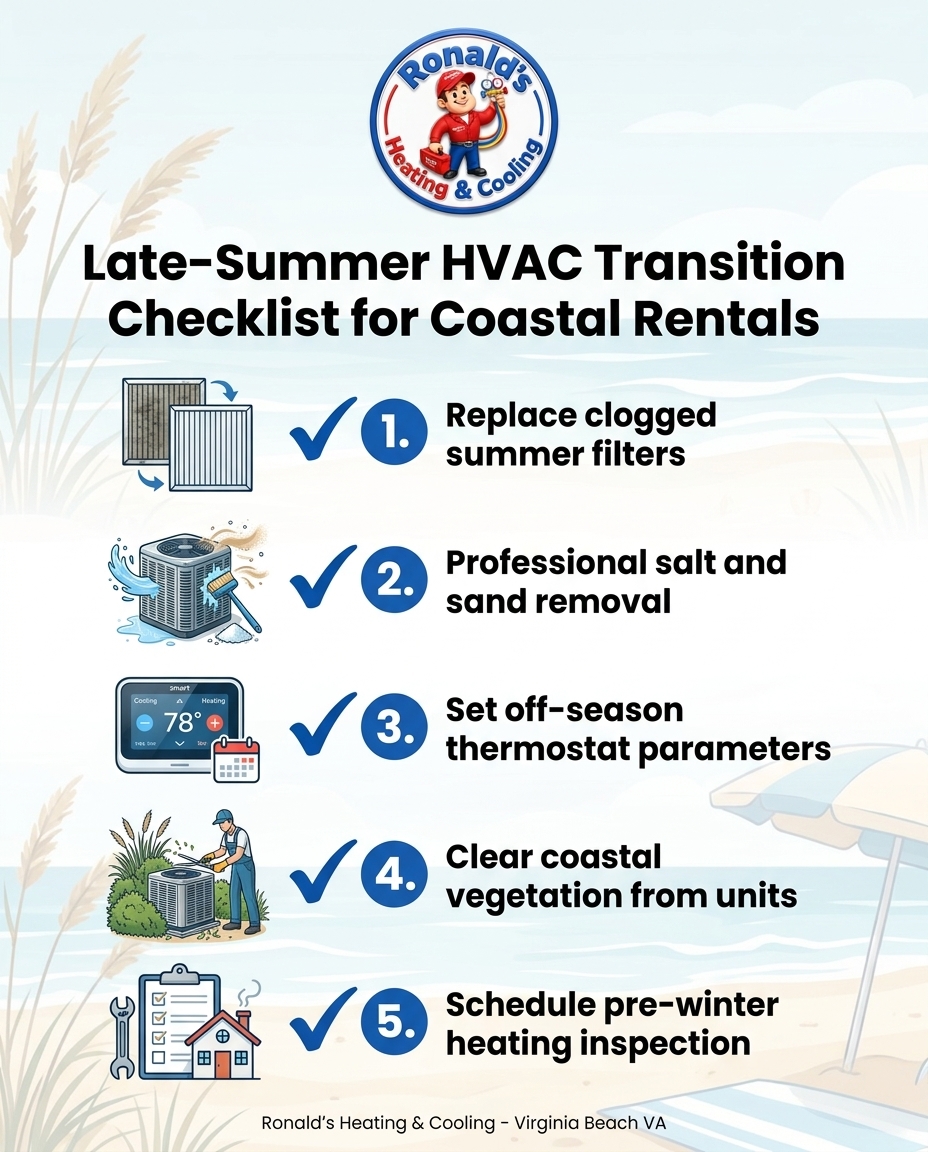
Your Late-Summer HVAC Transition Checklist
To keep your Virginia Beach oceanfront property in top condition, follow this actionable late-summer transition checklist. Completing these steps ensures your system recovers from the peak season and is ready for the months ahead.
• Schedule a comprehensive post-season professional tune-up: Have a licensed technician inspect the electrical connections, measure refrigerant levels, and test the blower motor after the heavy summer workload.
• Replace all heavily soiled air filters immediately: Summer guests rarely check filters. A clogged filter suffocates the system and accelerates wear. Install a fresh, high-quality pleated filter.
• Have outdoor condenser coils professionally cleaned: Ensure all corrosive salt residue and packed sand are safely washed away using specialized chemical cleaners.
• Calibrate smart thermostats for off-season humidity control: Clear out guest schedules and set the baseline temperature to 74°F to maintain active dehumidification.
• Clear yard debris and overgrown coastal vegetation: Cut back any sea oats, dune grass, or bushes that have grown within two feet of the outdoor cabinet to ensure proper airflow.
Frequently Asked Questions
What is the best thermostat setting for a vacant vacation rental?
The best thermostat setting for a vacant vacation rental in a coastal climate is between 74°F and 76°F. This temperature range is warm enough to significantly reduce your energy bills while still forcing the air conditioner to cycle on during warm parts of the day. Those active cooling cycles are necessary to pull moisture out of the air and prevent the indoor environment from feeling damp or musty.
Should I turn off the AC completely in an empty house?
No, you should never turn off the AC completely in an empty house, especially near the coast. Without the air conditioner running, indoor humidity will quickly rise to match the outdoor levels. This stagnant, humid air creates the perfect breeding ground for mold and mildew, which can cause thousands of dollars in damage to drywall, furniture, and flooring.
How do you protect outdoor AC units from salt air corrosion?
You protect outdoor AC units from salt air corrosion by having them professionally washed with specialized, coil-safe chemical cleaners at the end of every summer season. Additionally, applying a protective coastal coating to the fins can act as a barrier against the salt. Keeping the unit clear of sand and vegetation also ensures that moisture doesn't get trapped against the metal components.
How do you clean sand out of an AC condenser?
Cleaning sand out of an AC condenser requires professional attention, as the sand tightly packs itself between the fragile aluminum fins. A licensed technician will safely dismantle the outer casing and use specialized low-pressure washing techniques to push the sand out from the inside. Using a high-pressure hose yourself will likely bend the fins, permanently ruining the unit's ability to transfer heat.
How often should a coastal rental HVAC be serviced?
A coastal rental HVAC system should be serviced at least twice a year—once in the spring before the peak tourist season, and once in late summer or early fall to address the heavy wear-and-tear. Because these systems run almost continuously and battle harsh environmental elements, skipping even one maintenance visit can lead to catastrophic breakdowns and lost rental income.
How do I prevent mold in my vacation home during the shoulder season?
You prevent mold by actively managing the indoor humidity through your HVAC system. Leave interior doors open to promote airflow, set the thermostat to a moderate temperature so the AC continues to run periodically, and ensure the fan is set to "Auto" rather than "On." Monitoring the property with a smart thermostat that includes a humidity sensor will alert you if moisture levels start creeping too high.
Ready to Protect Your Investment?
The late August end-of-summer transition is the most critical time to evaluate your property's mechanical health. Do not let the heavy abuse of peak tourist season turn into a permanent, expensive failure. Secure your clear action plan today by scheduling a comprehensive post-season inspection to remove salt, clear sand, and reset your system for the shoulder season. Act now to ensure your vacation rental remains safe, dry, and ready for your next booking.
