





That First Chilly October Night: Is Your Heater's Burning Smell Normal?
The temperature finally drops, prompting you to switch the thermostat from cool to heat, expecting a wave of cozy warmth to fill your home. Instead, a harsh, burning odor floods through the vents, sending you straight to the internet in search of home maintenance tips and troubleshooting. Here at Ronald's Heating & Cooling, we receive countless calls each fall about this exact issue. It is one of the most common, and alarming, experiences for homeowners transitioning out of heavy summer cooling usage. When you rely heavily on your system to battle the summer heat, the heating components sit dormant, collecting layers of household debris.
This sudden burning smell creates an immediate moment of anxiety. After a long summer relying on your air conditioning services, you might be tempted to immediately call for AC repair in Virginia Beach or an emergency heating technician the moment something smells wrong. However, it is important to pause and evaluate the situation before assuming the worst. The core decision point you face is distinguishing between harmless seasonal dust burn-off and a genuine, potentially hazardous system malfunction.
During a typical mid-fall October heating startup, your furnace or heat pump is firing up its heating elements or heat exchanger for the very first time in months. Because these components get incredibly hot, any settled particles are instantly incinerated, producing that distinct toasted scent. Understanding the mechanics behind this process is the first step in diagnosing your system's health and ensuring your home remains both comfortable and safe as the seasons change.
The 30 to 60-Minute Rule for Burning Dust Odors
The Problem: When the heat kicks on, the air coming from your registers smells distinctly like singed lint, toasted hair, or burning dust, causing concern that something inside the unit is catching fire.
The Cause: Throughout the long summer and early fall months, your heating system's internal components—specifically the heat exchanger in a gas furnace or the electric heat strips in a heat pump—remain completely inactive. Even with a high-quality air filter in place, microscopic particles of pet dander, dead skin cells, airborne cooking grease, and general household dust inevitably bypass the filter and settle directly onto these dormant heating elements. When the system is finally activated, these components rapidly heat up to hundreds of degrees. The sudden extreme temperature instantly incinerates the accumulated blanket of debris, sending the resulting smoke and odor directly into your ductwork and out through your vents.
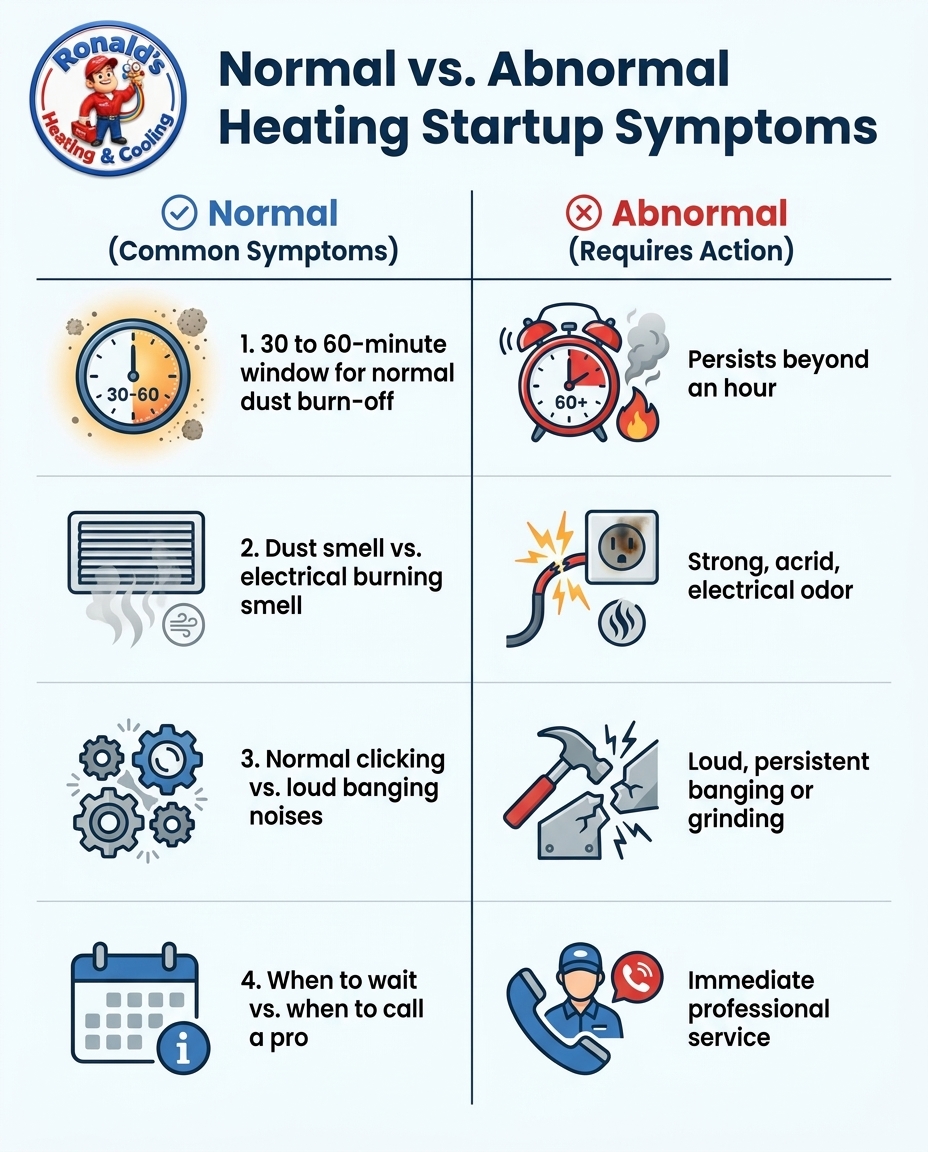
The Solution: The most honest diagnostic advice our technicians at Ronald's Heating & Cooling can offer is to practice patience and apply the 30 to 60-minute rule. We often see a pattern where homeowners panic and request an immediate, frantic service call, incurring an unnecessary diagnostic fee for a perfectly normal mechanical process. Instead, you should simply wait. A normal, harmless dust burn-off odor should completely dissipate within the first 30 to 60 minutes of the initial heating cycle. If the smell is strictly similar to burning dust (and not melting plastic or electrical ozone), it is entirely safe to let the system run continuously during this window to clear the elements.
How to Safely Monitor Your First Heating Cycle
While waiting out the burn-off period, you should take active steps to monitor the system and ensure the environment remains safe. Proper observation prevents minor issues from escalating into major hazards.
• Ensure optimal airflow: Walk through your home and verify that all supply and return air vents are open, unblocked by furniture, and completely unobstructed. Restricted airflow traps heat in the system, prolonging the odor and stressing the blower motor.
• Clear the mechanical space: Keep the area immediately surrounding your indoor air handler or furnace entirely clear of flammable materials, stored boxes, and cleaning chemicals.
• Ventilate the space: If the initial dust odor is particularly overwhelming during that first cycle, open a few windows slightly to cross-ventilate the house and allow the harmless smoke to escape.
• Monitor the thermostat: Watch the temperature reading to confirm the system is actually producing warm air and slowly raising the indoor temperature, rather than just circulating cold, smelly air.
How Coastal Salt Air Stresses Your HVAC System
Troubleshooting a sluggish heating startup requires understanding the unique environment your equipment operates in. Having serviced Virginia Beach coastal properties for years, our team sees firsthand how the local climate introduces severe operational challenges that inland homes simply do not face. The specific combination of high summer humidity and continuous exposure to airborne salt spray creates a highly corrosive environment for outdoor HVAC components. When the wind blows off the ocean, it carries microscopic salt crystals miles inland, depositing them directly onto your heat pump's aluminum fins, copper coils, and sensitive electrical contactors.
During the heavy cooling demands of summer, condensation forms on these coils. When mixed with coastal salt, this condensation creates a highly conductive, corrosive saline solution that aggressively attacks the metal components. By the time autumn arrives, a system that has been baking in the salty, humid air can suffer from pitted coils, rusted fan blades, and corroded electrical terminals. This accelerated wear-and-tear directly impacts how the system performs when you finally ask it to reverse its operation and provide heat.
If your system skipped routine AC maintenance over the summer, the accumulated salt and corrosion can cause significant delays in the fall heating transition. Corroded electrical contactors may struggle to close properly, leading to delayed ignition or a system that clicks repeatedly without starting. Furthermore, heavily oxidized coils lose their ability to efficiently absorb ambient heat from the outside air, resulting in weak airflow and lukewarm temperatures inside the home. Recognizing how this coastal environment uniquely stresses your system helps explain why a mid-fall startup might feel sluggish or sound rougher than expected.
Troubleshooting Unusual Fall Startup Noises
Beyond unusual odors, auditory warnings are the most common indicator that your heating system is struggling with its seasonal transition. A mid-fall October heating startup is often accompanied by a symphony of clicks, clunks, and whooshes. Knowing the difference between the harmless sounds of thermal expansion and the destructive sounds of mechanical failure can save your system from catastrophic damage. If your system struggled with excessively long cooling cycles during the summer heatwaves, the blower motor and compressor are already fatigued, making them more susceptible to noise-producing mechanical issues in the fall.
When the system switches to heating mode, the sudden introduction of hot air into cold, dormant metal ductwork causes rapid thermal expansion. This expansion is entirely normal but can be surprisingly loud. However, noises originating from the actual mechanical equipment—especially the outdoor heat pump or indoor blower cabinet—require careful listening and immediate categorization.
• Light Clicking at Startup — Possible Cause: Thermostat relays engaging; gas valve opening; normal electrical contactors firing. — Action Required: None. This is a normal part of the startup sequence.
• Popping or Pinging — Possible Cause: Thermal expansion of metal ductwork as hot air rapidly fills cold vents. — Action Required: None. Normal physical reaction to temperature changes.
• Loud "Whoosh" Outside — Possible Cause: Heat pump reversing valve shifting from cooling mode to heating mode. — Action Required: None. Normal operation for heat pumps.
• Metal-on-Metal Screeching — Possible Cause: Failing blower motor bearings, a slipped fan belt, or a seized outdoor fan motor. — Action Required: Turn off system immediately. Professional repair required.
• Persistent Banging/Rattling — Possible Cause: Loose internal components, an unbalanced fan blade, or a failing compressor. — Action Required: Turn off system immediately. Professional diagnostic needed.
If you notice that the system runs continuously but never actually warms the house—similar to why your AC never reaches 72 degrees in the summer—accompanied by a persistent humming or buzzing sound, the reversing valve may be stuck, or the compressor capacitor may have failed. In these scenarios, the system is consuming electricity without transferring heat, requiring professional troubleshooting.
When to Skip the Wait and Call a Professional
While the 30 to 60-minute rule applies to standard dust burn-off, there are critical situations where waiting is the wrong choice. Certain odors and performance failures indicate a severe safety hazard or an imminent mechanical breakdown. If your system presents any of the following red flags during the first 30 to 60 minutes of the initial heating cycle, you must bypass the waiting period, turn the system off at the thermostat, and contact a licensed professional immediately.
Immediate Red Flags to Watch For:
• Electrical Ozone Odors: If the smell resembles an overheated electrical outlet, melting wire insulation, or a sharp, metallic "ozone" scent, this is not dust. It indicates failing electrical components, a short circuit, or an overheating blower motor that poses a severe fire risk.
• Burning Plastic Smells: A distinct melting plastic odor usually means a foreign object has fallen into the ductwork or rested against the heat exchanger, or a capacitor is actively melting down.
• Rotten Egg Scent (Gas Furnaces): If you have a natural gas or propane furnace and smell sulfur or rotten eggs, this indicates a gas leak. Evacuate the home immediately and call your utility provider and HVAC technician.
• Persistent Dust Odors: If the toasted dust smell continues well past the initial 60-minute window and shows no signs of fading, your air filter may be severely compromised, or the blower motor may be coated in a thick layer of insulating grime that requires professional chemical cleaning.
• Failure to Produce Heat: If the thermostat clicks, the fan runs, but the air coming from the vents remains stubbornly cold after 15 minutes, a critical ignition component or the heat pump reversing valve has failed.
To prevent these stressful fall startup failures, proactive seasonal care is paramount. Just as a professional AC tune-up prepares your system for the brutal summer heat, a dedicated fall heating inspection ensures that your heat exchanger is safe, your electrical connections are tight, and your coastal equipment is ready to perform safely all winter long.
Frequently Asked Questions About Fall Heating Startup
Why does my heater smell like burning dust when I turn it on?
This happens because dust, pet dander, and household particles settle on the dormant heating elements during the summer months. When you turn the heat on for the first time in autumn, these elements reach high temperatures and instantly incinerate the accumulated debris. This harmless process produces a distinct toasted odor that circulates through your vents.
Is a burning smell from the heater dangerous?
A temporary dust burn-off smell is completely normal and not dangerous. However, if the odor smells like melting plastic, electrical wire, or rotten eggs, it is highly dangerous. Electrical and gas odors indicate severe malfunctions that require you to shut the system down immediately and call a licensed professional.
Why is my heat pump making a loud noise on startup?
A loud "whoosh" or brief mechanical clunk is often just the reversing valve shifting the system from cooling to heating mode. However, if you hear violent banging, metal-on-metal screeching, or persistent rattling, it indicates failing motor bearings or loose internal components that require immediate professional repair.
How long does a furnace smell when first turned on?
A normal dust burn-off odor should completely dissipate within 30 to 60 minutes of continuous operation. If the smell persists beyond this initial window, or if it grows stronger instead of fading, you should turn the system off and have a professional inspect the unit for deeper blockages or failing parts.
Can coastal salt air damage my outdoor heat pump over the summer?
Yes, the combination of high humidity and airborne salt spray uniquely stresses Virginia Beach coastal properties. This environment accelerates corrosion on aluminum fins, copper coils, and electrical contactors, which can lead to sluggish performance, delayed ignition, and reduced efficiency when you switch the system over to heating in the fall.
What is the difference between a dust smell and an electrical burning odor?
A normal dust smell resembles singed lint or toasted hair and quickly fades as the system runs. An electrical burning odor smells sharp, metallic, like an overheated appliance or melting wire insulation, and it will persist or worsen as the system operates. Electrical smells require immediate system shutdown.
Get Honest Heating Diagnostic Advice for Your Coastal Home
Navigating the transition from summer cooling to fall heating doesn't have to be a source of stress. While most initial startup smells are simply harmless dust burning off the elements, persistent odors, strange mechanical noises, and weak airflow require a trained eye. For Virginia Beach coastal properties, understanding the specific toll that salt air and high humidity take on your equipment is vital to maintaining a safe, efficient home.
If you have applied the 60-minute rule and your system is still producing alarming smells, or if you have any doubts whatsoever about the safety and performance of your heating equipment, do not hesitate to reach out to our team at Ronald's Heating & Cooling. Scheduling a thorough inspection with our local experts who understand coastal wear-and-tear ensures you receive clear, safe guidelines on what is normal and what requires professional intervention, keeping your home comfortable all season long.
