





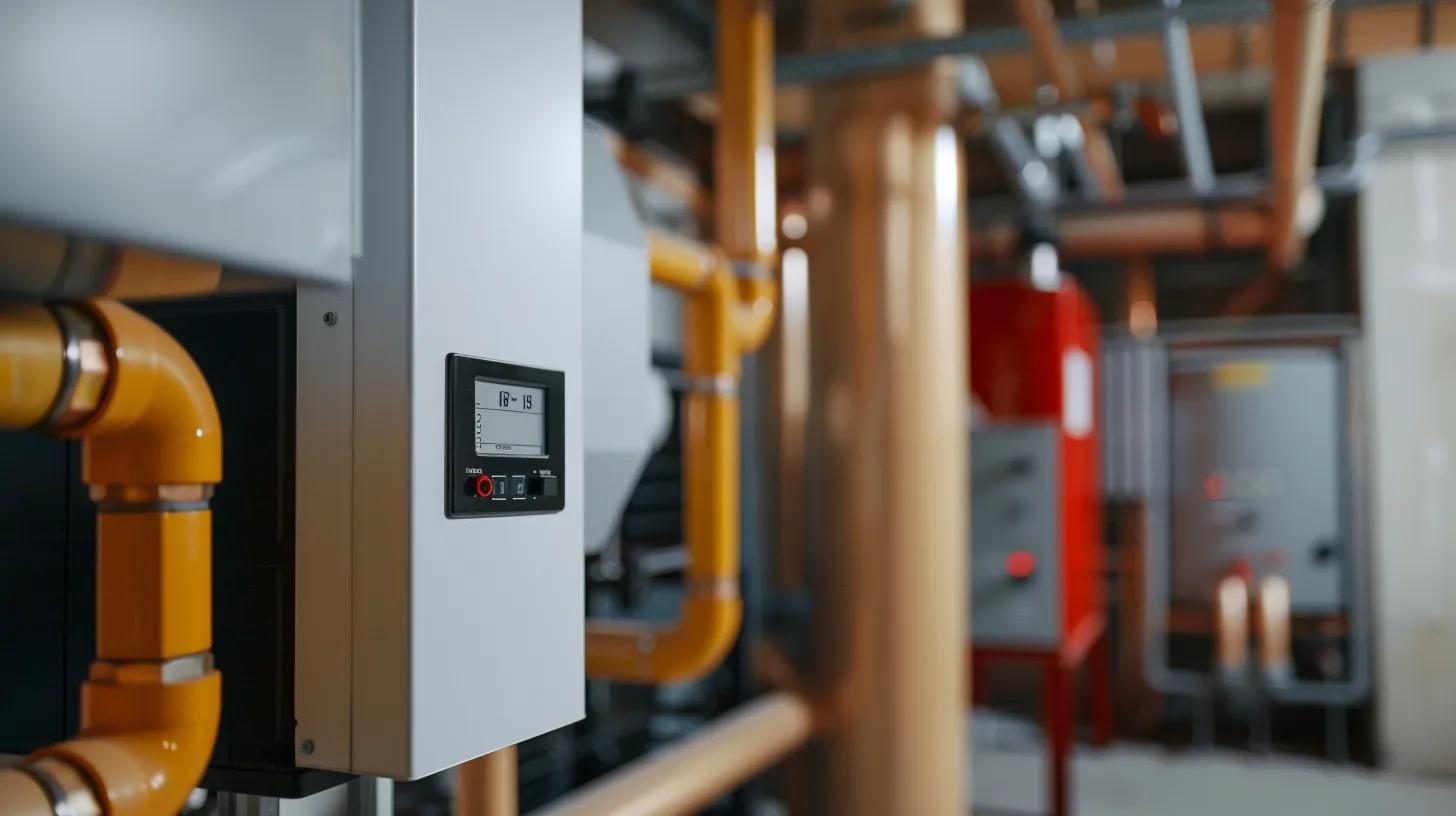
Best Energy-Efficient HVAC Units for Your Home: Comprehensive Guide to Saving Energy and Costs
Energy-efficient HVAC units deliver the same or better comfort while using significantly less energy than older systems, reducing monthly utility bills and lowering home carbon emissions This guide will help you choose energy-efficient HVAC units and show how Ronald's Heating & Cooling can help with installations and service appointments Homeowners in Virginia Beach and nearby communities face warm, humid summers and mild winters, so choosing equipment tuned for local climate performance—high SEER2 cooling, good HSPF for heat pumps, or high-AFUE furnaces where appropriate—matters both for comfort and cost The following sections explain why energy-efficient HVAC pays off, compare top system types including heat pumps, ductless mini-splits, and geothermal systems, clarify SEER2/HSPF/AFUE ratings, explore smart thermostats and zoning, and summarize rebates and incentives available to Virginia Beach homeowners Read on to learn practical selection criteria, expected savings, and how to plan a qualifying installation with local contractors who understand Manual J sizing and rebate requirements.
Why Choose Energy-Efficient HVAC Systems for Your Home?
Energy-efficient HVAC systems reduce operating costs, improve indoor comfort, and lower environmental impact by using advanced components like variable-speed compressors and better heat exchangers These systems work by transferring heat more effectively and modulating output to match demand, which cuts runtime and cycling losses while maintaining steady indoor temperatures The direct benefits to homeowners include smaller monthly bills, quieter operation, and improved humidity control, all of which improve daily comfort and long-term property value The next paragraphs break these benefits into measurable categories and explain how upgrade choices translate into real savings and environmental gains.
Energy efficiency yields three primary homeowner advantages:
• Lower energy bills: Improved equipment efficiency and reduced runtime directly lower monthly utility costs.
• Better comfort: Variable-speed components and modern controls maintain consistent temperatures and improved humidity management.
• Environmental impact: Reduced electricity or fuel consumption lowers greenhouse gas emissions and grid demand.
Each of these benefits has practical implications for purchase decisions and installation planning; below we explain how efficiency technologies create those outcomes and why proper system sizing matters for achieving promised savings.
How Do Energy-Efficient HVAC Units Lower Your Energy Bills?
Energy-efficient HVAC units lower bills by delivering required heating or cooling with less energy through higher-rated components such as higher SEER2 or HSPF for cooling and heat pumps, and higher AFUE for furnaces Technologies like inverter-driven compressors and variable-speed fans reduce on/off cycling and maintain steady output, cutting peak-power use and improving part-load efficiency Proper system sizing using Manual J load calculations prevents oversizing that can cause short cycling and poor humidity control, which otherwise erodes real-world efficiency For example, upgrading from an older 10 SEER unit to a 16–20 SEER2 unit can reduce cooling energy use by roughly 20–40% depending on climate and duct losses, translating to noticeable monthly savings.
Careful attention to ductwork and air sealing also matters, because even high-efficiency equipment performs poorly with leaky ducts or mismatched distribution; improving ducts and using Manual D and Manual S guidance together maximizes installed-system efficiency Ensuring that the contractor performs a full system assessment before replacement links efficiency ratings to expected bills and prevents performance gaps Understanding these mechanisms leads naturally to the comfort and environmental benefits that efficient systems deliver.
What Comfort and Environmental Benefits Do Energy-Efficient Systems Provide?
Efficient systems deliver more consistent indoor temperatures, tighter humidity control, and quieter operation because variable output avoids sudden on/off cycles and reduces air velocity noise These comfort improvements are particularly valuable in Virginia Beach, where summer humidity makes precise dehumidification a key comfort factor; systems that run longer at lower speeds remove more moisture per hour than short-cycling units Environmentally, lower energy consumption reduces household carbon intensity and eases local grid peak loads during hot spells by cutting peak electricity demand.
Improved indoor air quality often accompanies modern HVAC replacements because new equipment integrates better filtration and maintains balanced ventilation when paired with appropriate IAQ solutions Choosing correctly sized, efficient equipment therefore improves daily living conditions and reduces a home's carbon footprint, while preparing homeowners to access incentives and rebates that reward verified efficiency improvements.
What Are the Top Types of Energy-Efficient HVAC Systems?
Energy-efficient HVAC systems come in several main types—air-source heat pumps, ductless mini-splits, geothermal heat pumps, high-SEER central air conditioners, and high-AFUE condensing furnaces—each with different efficiency metrics, installation needs, and best-use cases
Comparing these systems across typical ratings, ductwork needs, and zoning capability helps homeowners match technology to house type and climate The table below summarizes key attributes to guide an initial decision.
Introductory table comparing main system types:
• Air-source heat pump — Typical Ratings (SEER2 / HSPF / AFUE): 16–24 SEER2, 8–13 HSPF — Best Use Case: Whole-home heating + cooling in moderate climates — Ductwork Required: Often uses existing ducts — Zoned Capability: Good with zoning — Relative Efficiency: High
• Ductless mini-split — Typical Ratings (SEER2 / HSPF / AFUE): 18–30 SEER2, 8–12 HSPF — Best Use Case: Additions, room-by-room control, homes without ducts — Ductwork Required: No — Zoned Capability: Excellent (per zone heads) — Relative Efficiency: Very High in zoned use
• Geothermal (ground-source) — Typical Ratings (SEER2 / HSPF / AFUE): COP 3.5–5 (varies) — Best Use Case: New builds or major retrofits with space for loop — Ductwork Required: Can use ducts or hydronic — Zoned Capability: Good with zoned distribution — Relative Efficiency: Very High (best operational)
• High-SEER central AC — Typical Ratings (SEER2 / HSPF / AFUE): 16–26 SEER2 — Best Use Case: Homes with existing ducts focused on cooling — Ductwork Required: Yes — Zoned Capability: Moderate with dampers — Relative Efficiency: High
• High-AFUE furnace (condensing) — Typical Ratings (SEER2 / HSPF / AFUE): AFUE 90–98% — Best Use Case: Cold climates or gas-heated homes — Ductwork Required: Yes — Zoned Capability: Moderate with zoning — Relative Efficiency: High for fuel-based heat
This comparison highlights trade-offs like upfront cost versus operating savings and shows where ductless or geothermal solutions can outperform traditional systems in specific scenarios Use this as a starting point to evaluate which system aligns with your home layout and long-term energy goals.
How Do High-Efficiency Heat Pumps Save Energy and Provide Year-Round Comfort?
High-efficiency heat pumps transfer heat rather than generate it, using refrigerant cycles to move thermal energy from outdoor air to indoor space for heating and reversing the process for cooling Modern cold-climate and variable-speed heat pumps maintain strong performance at lower outdoor temperatures by using advanced compressors and improved refrigerants, producing both efficient heating and cooling in a single package In Virginia Beach’s mild winters and hot summers, heat pumps often offer the best balance of year-round comfort and energy savings, with SEER2 and HSPF ratings providing a clear measure of seasonal efficiency.
Heat pumps also pair well with smart thermostats and zoning to further reduce energy use by targeting conditioning only where needed, enhancing both comfort and operating cost savings When considering a heat pump upgrade, verify Manual J sizing and installer experience in heat pump systems to achieve promised efficiencies and reliable year-round performance.
What Are the Advantages of Ductless Mini-Split Systems for Zoned Energy Savings?
Ductless mini-splits use small outdoor compressor units connected to one or more indoor air-handling heads, allowing precise temperature control per room or zone and eliminating duct losses common in central systems Because each indoor unit operates independently with inverter-driven compressors, homeowners can turn off conditioning in unused spaces and avoid wasting energy on unoccupied rooms This zoned approach is especially effective for older homes without ducts, sunrooms, additions, or rooms with unique load profiles.
Mini-splits also offer high SEER2/HSPF performance figures and flexible installation with minimal disruption, delivering strong energy savings for targeted applications
For whole-home solutions, multi-zone systems can be designed to cover multiple rooms efficiently, though homeowners should consider the visual impact of indoor heads and coordinate placement to optimize airflow and aesthetics.
How to Understand HVAC Efficiency Ratings Like SEER2 and AFUE?
HVAC efficiency ratings—SEER2 for cooling, HSPF for heat pump heating efficiency, and AFUE for furnace fuel efficiency—provide standardized measures that let homeowners compare equipment performance and estimate operating costs SEER2 indicates seasonal cooling efficiency (higher is better), HSPF indicates seasonal heat pump heating performance, and AFUE shows the percentage of fuel converted to heat in furnaces (higher percentage means less fuel wasted) Understanding what good values look like and how modern SEER2 test changes affect baseline performance helps homeowners choose equipment that truly reduces energy use and qualifies for rebates.
The table below defines each rating with practical implications to guide purchasing decisions and expectations about energy savings.
• SEER2 — What It Measures: Seasonal Energy Efficiency Ratio (cooling) — Practical Implication: Higher SEER2 means lower electricity use for cooling; aim for 16+ for strong savings in warm climates
• HSPF — What It Measures: Heating Seasonal Performance Factor (heat pumps) — Practical Implication: Higher HSPF indicates more efficient heating; values 8+ deliver meaningful winter savings
• AFUE — What It Measures: Annual Fuel Utilization Efficiency (furnaces) — Practical Implication: AFUE is percent of fuel turned into heat; 90%+ AFUE condensing furnaces are much more fuel-efficient than older models
• COP — What It Measures: Coefficient of Performance (heat pumps, geothermal) — Practical Implication: COP expresses instantaneous efficiency; higher COP implies superior energy performance under test conditions
This practical mapping helps homeowners translate rating labels into expected operational performance and cost outcomes when comparing equipment options and planning installations.
What Does SEER2 Rating Mean for Air Conditioners and Heat Pumps?
SEER2 measures the seasonal cooling efficiency of air conditioners and heat pumps using updated test procedures that better reflect modern equipment and field conditions A higher SEER2 number indicates that the equipment provides more cooling output per unit of electricity over a typical season, and recent regulation updates have raised minimum SEER2 baselines in many regions For homeowners, selecting a unit with a higher SEER2 tends to reduce cooling-related energy consumption, particularly in climates with long cooling seasons like Virginia Beach, where efficient cooling drives most annual HVAC energy use.
When choosing equipment, look for matched system components—outdoor unit, indoor coil, and controls—and ensure the contractor performs proper sizing and ductwork checks to realize labelled SEER2 benefits in the home.
How Does AFUE Rating Affect Furnace Heating Efficiency?
AFUE expresses the percentage of fuel energy converted into usable heat by a furnace over a typical year; a furnace with 95% AFUE converts 95% of fuel into heat and wastes 5%, whereas an older 70% AFUE unit wastes 30% of fuel energy Higher AFUE values therefore translate directly into lower fuel consumption and reduced heating bills, especially in homes that rely significantly on combustion heating Condensing furnaces achieve the highest AFUE values by extracting additional heat from exhaust gases through secondary heat exchangers, improving overall fuel use.
Choosing the right AFUE rating depends on local fuel costs, climate severity, and whether heat pump alternatives are viable; contractors should present comparative operating cost estimates based on local utility rates and expected run hours.
How Can Smart Thermostats and Zoning Systems Maximize HVAC Energy Savings?
Smart thermostats and zoning systems reduce wasted energy by aligning system output with actual occupancy patterns and local comfort preferences, and by enabling finer control over where and when conditioning occurs Smart thermostats implement learning algorithms, adaptive scheduling, remote control, and usage reporting that can trim runtime and prevent unnecessary conditioning
Zoning systems—using motorized dampers, multiple thermostats, or multi-zone mini-splits—focus heating and cooling only where needed, limiting energy consumption in rarely used areas The following table compares common thermostat features and zoning approaches with their typical energy-saving impacts.
Introductory EAV table describing control technologies:
• Smart Thermostat (learning) — Key Attribute: Adaptive schedules based on use — Expected Energy Impact: 7–15% energy savings through optimized setpoints
• Geofencing & Remote Access — Key Attribute: Adjusts when occupants are away/arriving — Expected Energy Impact: Reduces wasted runtime when home is unoccupied
• Motorized Dampers (zoning) — Key Attribute: Directs airflow by zone — Expected Energy Impact: Significant savings by avoiding whole-home conditioning
• Multi-zone mini-split — Key Attribute: Independent indoor heads — Expected Energy Impact: High savings for room-by-room control
• Integration with HVAC — Key Attribute: Compatibility with multi-stage systems — Expected Energy Impact: Maximizes equipment efficiency and comfort
This comparison clarifies which control approaches suit different home layouts and occupant behavior, and how integration amplifies savings.
What Features Do Smart Thermostats Offer for Energy Management?
Smart thermostats combine learning algorithms, occupancy detection, remote access, and energy reports to reduce HVAC runtime and align setpoints with real-life schedules Adaptive scheduling learns typical patterns and gradually minimizes unnecessary conditioning, while geofencing and remote control enable automatic setback when everyone leaves the house Usage and energy reports provide actionable insights that help homeowners tweak habits and identify efficiency opportunities, often resulting in single-digit to low-double-digit percentage savings on heating and cooling costs.
Smart thermostats also integrate with other home systems and zoning controls to coordinate multi-stage equipment and dampers, improving the system-level efficiency beyond thermostat-level savings Understanding these feature-level benefits makes it easier to choose a controller that suits household patterns and integrates with the chosen HVAC system.
How Do HVAC Zoning Systems Improve Comfort and Reduce Energy Use?
Zoning systems use multiple thermostats and motorized dampers or independent indoor units to supply conditioned air only where it is needed, which reduces runtime and avoids wasting energy on unoccupied rooms By tailoring conditioning to actual occupancy and differing thermal loads across floors or wings, zoning improves comfort consistency and reduces complaints about hot or cold spots For homeowners, zoning is especially effective in multi-story homes, additions, or when living patterns concentrate use in specific areas at different times of day.
When evaluating zoning, ensure that the HVAC system is properly sized and that control strategies coordinate with equipment capabilities; poorly designed zoning can create imbalances or inefficiencies, so professional Manual J/D/S-informed design is crucial for best outcomes.
What Local Utility Rebates Can Virginia Beach Homeowners Access?
Local utility providers and regional energy programs often offer rebates for high-efficiency HVAC installations, duct improvements, and qualifying heat pump systems, though availability and amounts vary by program and change over time Common requirements include minimum SEER2/HSPF/AFUE thresholds, use of certified contractors, and sometimes pre-approval before purchase to ensure the project qualifies
Homeowners should check current program details and timing, because some rebates require applications or documentation before equipment is installed.
Working with a local, rebate-aware contractor simplifies the process: Ronald's Heating & Cooling serves Virginia Beach, Portsmouth, Norfolk, and Chesapeake and can help verify local rebate eligibility, coordinate required paperwork, and ensure installations meet program rules so homeowners maximize available incentives.
Conclusion
Investing in energy-efficient HVAC systems not only reduces your monthly utility bills but also enhances indoor comfort and minimizes environmental impact By understanding the various system types and efficiency ratings, homeowners can make informed decisions that align with their specific needs and local climate Take the next step towards a more sustainable and cost-effective home by exploring our range of high-efficiency HVAC solutions Contact Ronald's Heating & Cooling today to schedule a consultation and discover how we can help you achieve optimal energy savings.
